Language
Sorbian is a West Slavic language spoken mainly by the Sorbian minority in Lusatia, comprising 20,000 to 30,000 people. The Sorbs are one of four recognised minorities in Germany; they are an ethnic group that has preserved its own culture and language. The development of the Sorbian language can be traced back to the 15th century, when the first written records appeared. The ancestors of today’s Sorbs came to this region more than 1,000 years ago. They never had their own state, but they always had their own language, festivals and customs.
Over the centuries, Sorbian went through various phases, including a heyday in the 19th century when national movements and interest in Sorbian culture increased. The language was promoted in schools and the media, which led to its standardisation. There are two main variants of Sorbian: Upper Sorbian, which is mainly spoken in Upper Lusatia, and Lower Sorbian, which is widespread in Lower Lusatia.
However, the use of Sorbian is threatened by globalisation and the influence of the German language. Nevertheless, efforts are being made to preserve and promote the language in order to maintain Sorbian identity.
The number of Sorbian speakers varies depending on the source, but estimates suggest that around 20,000 to 30,000 people speak Sorbian. The majority of speakers live in Lusatia, particularly in the regions around Bautzen (for Upper Sorbian) and Cottbus (for Lower Sorbian). However, the Sorbian language is under threat as the number of active speakers has declined over the years. Nevertheless, efforts are being made to preserve and promote the language, particularly through education and cultural initiatives. In Brandenburg and Saxony, many places have street signs written not only in German but also in Sorbian.
Script
Today, Sorbian is used in various contexts, including schools, literature and the media. The Sorbian language has official status in certain regions and is promoted by cultural organisations. The script used for both variants is based on the Latin alphabet and has been adapted over time to reflect the specific sounds of the Sorbian language.
ANSPRECHBAR
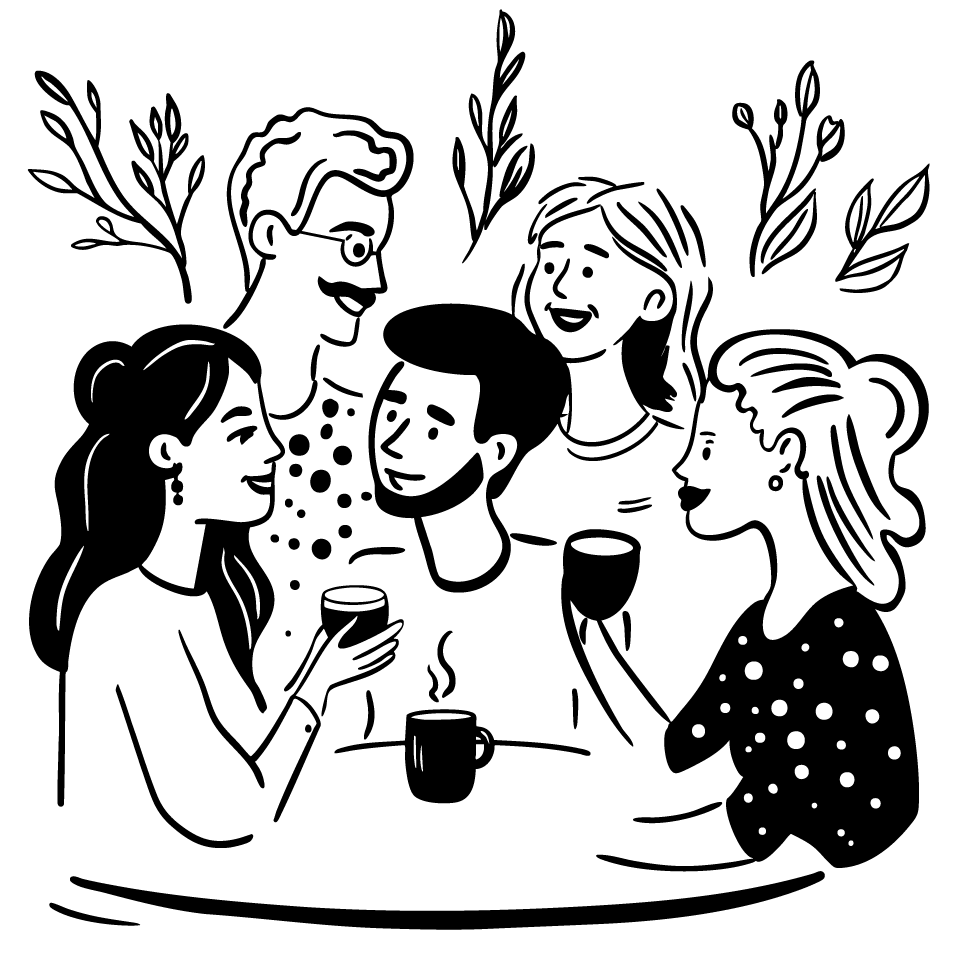
We are ANSPRECHBAR – for a better understanding! We get people talking – regardless of language, culture, age, budget or social status – at creative workshops, exhibitions and in an interview magazine with empathetic portraits. Join us and let’s build bridges together!
Period
01-12.2025
Project coordination
Yvonn Spauschus (project management)
Yulia Vishnichenko · Moussa Mbarek · Nadine Wölk · Rosa Brockelt · Bela Álvarez (workshop leader)
Rosa Hauch · Birthe Mühlhoff (moderation, documentation)
Cooperation partners
JugendKunstschule Dresden – Standort Passage, Omse e.V., Malteser Hilfsdienste e.V., Montagscafé am Staatsschauspiel Dresden, Umweltzentrum Dresden – ABC Tische, Internationale Gärten Dresden e.V, Uniwerk e.V. (Pirna), Buntes Meißen Bündnis Zivilcourage e.V. and many more
Supported by
The project is funded by Heidehof Stiftung GmbH the State Ministry for Social Affairs and Social Cohesion. This measure is co-financed with tax funds on the basis of the budget passed by the Saxon state parliament within the framework of the state programme Integrative Maßnahmen.