© Janina Kracht (2025)
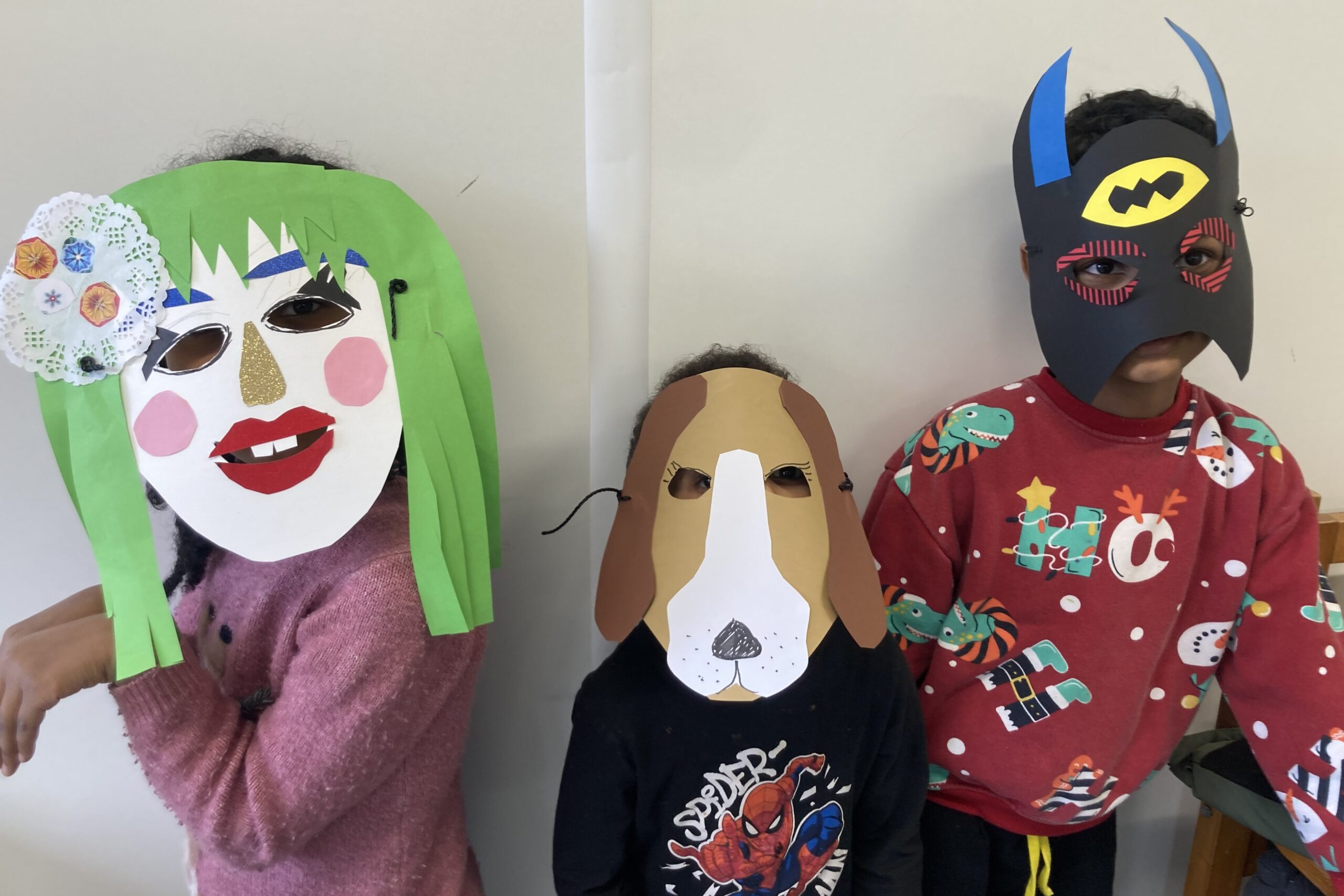
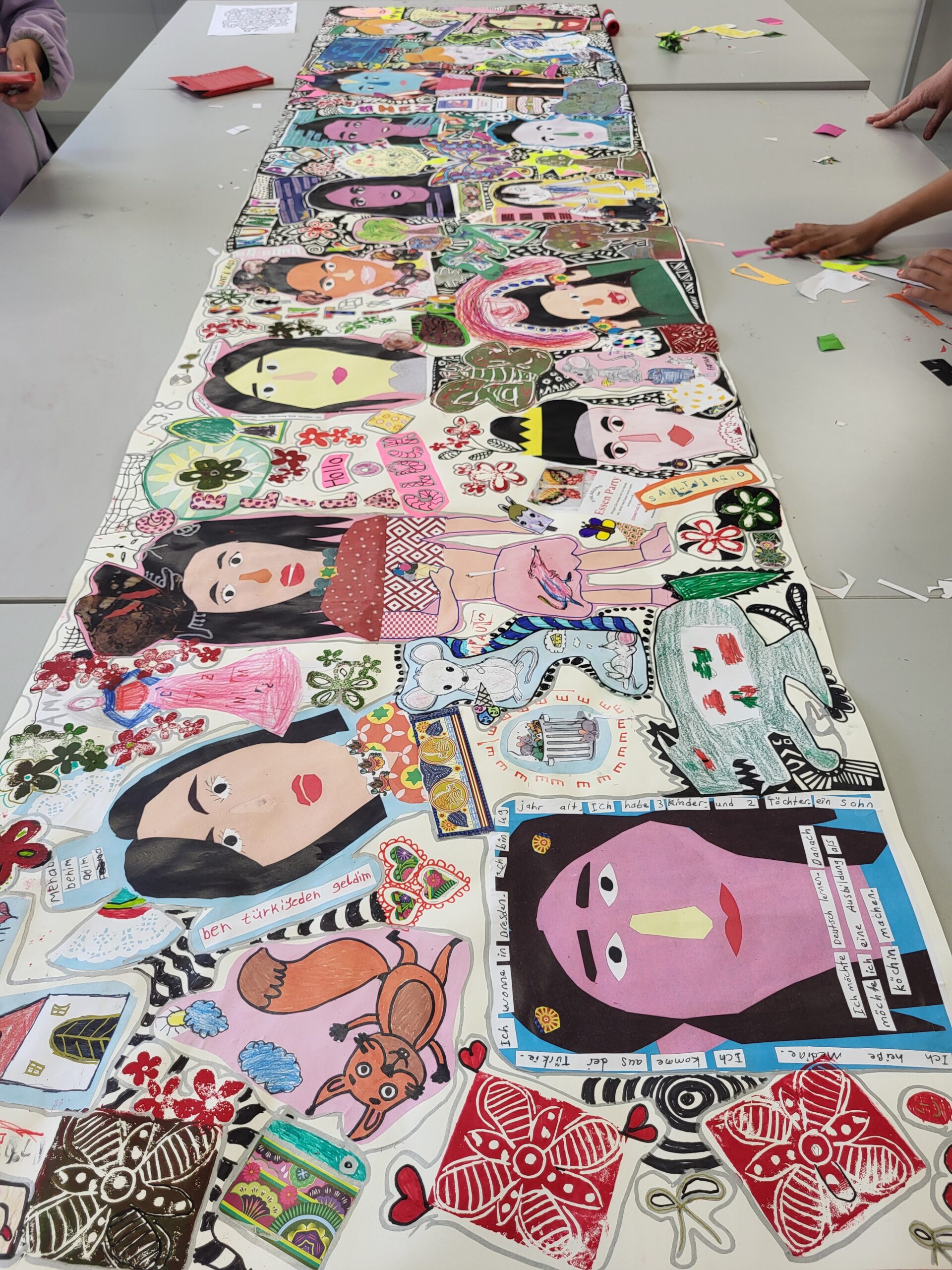
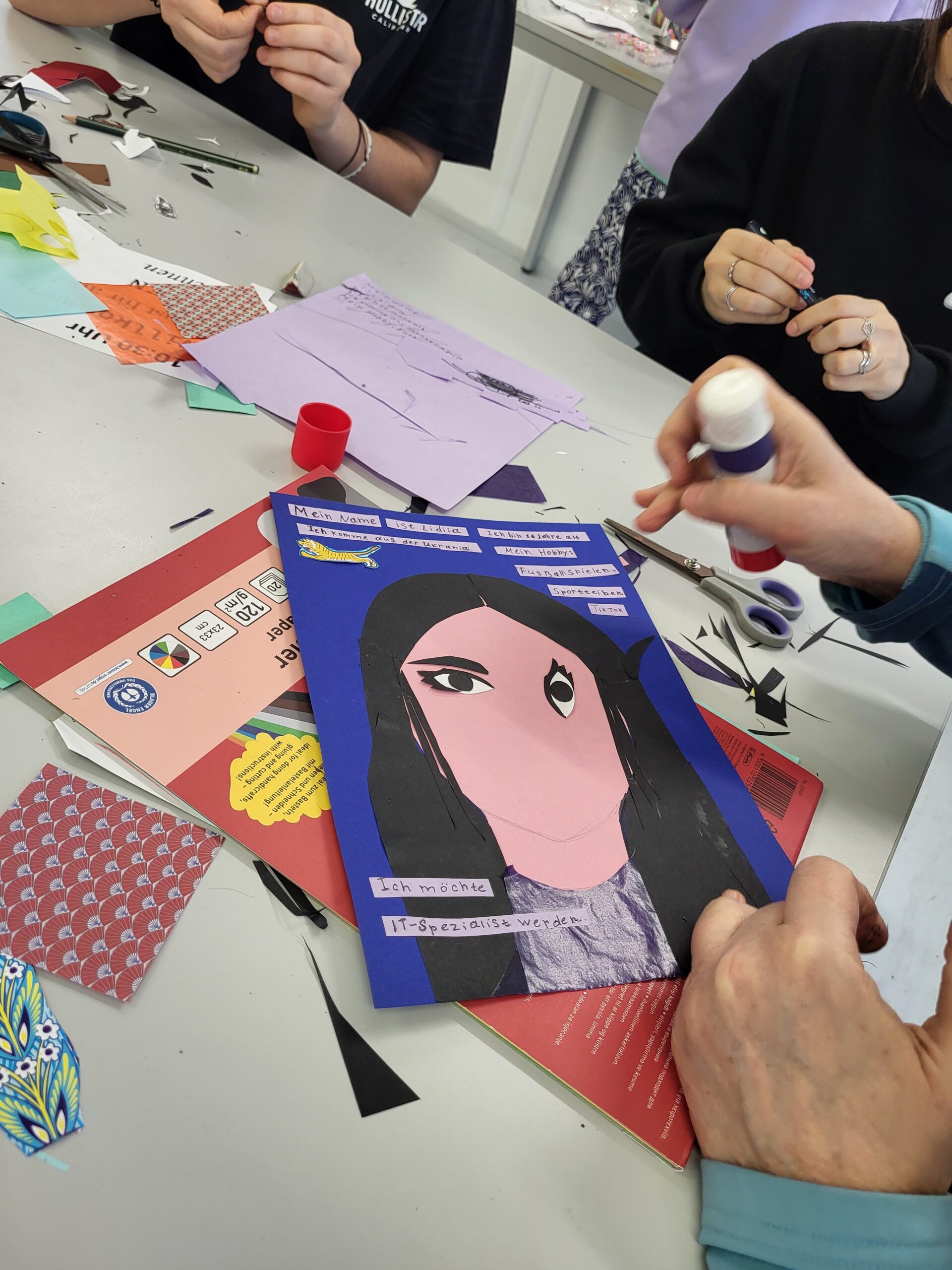
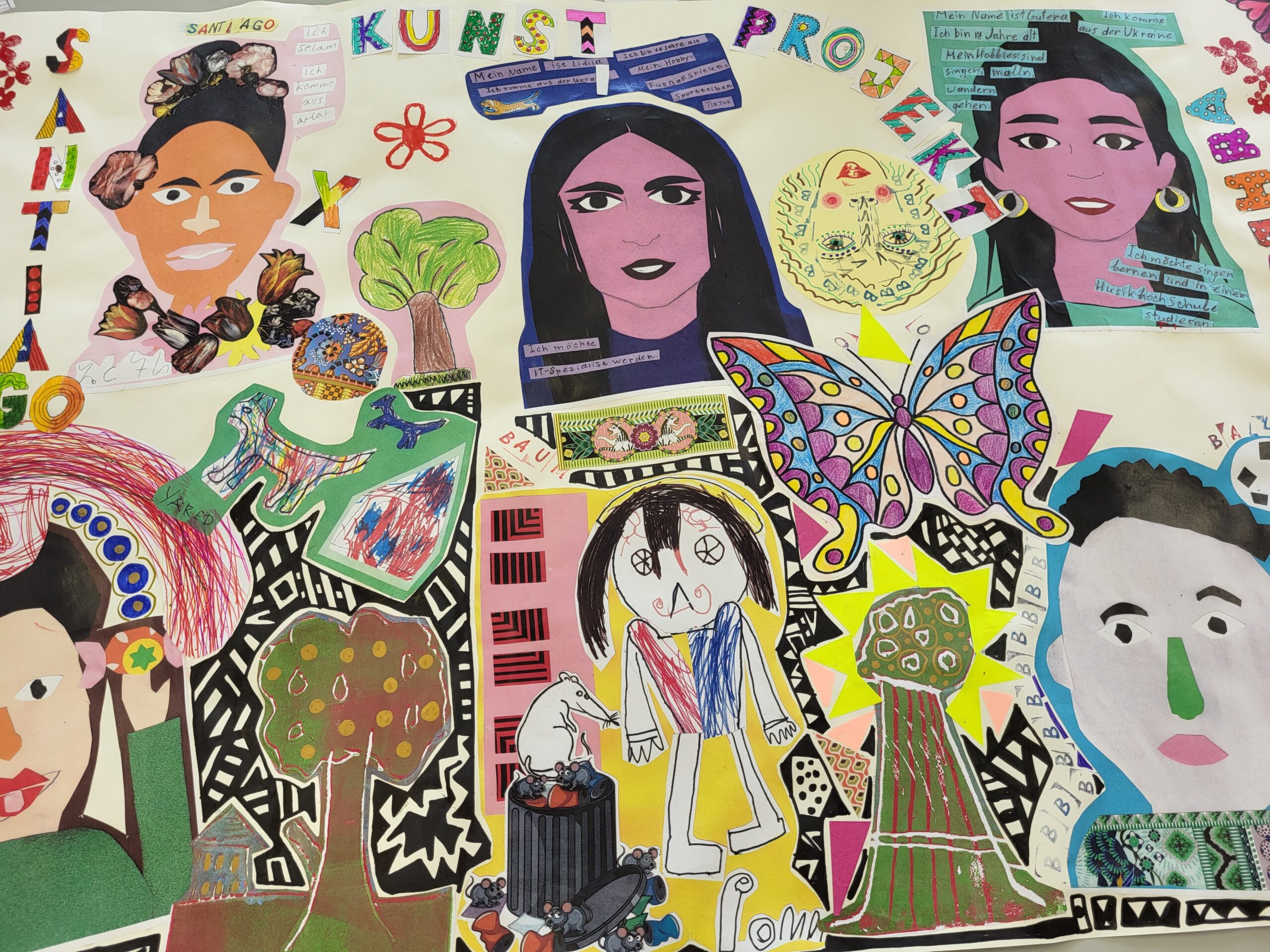
As part of the ‘Bilderwand’ (picture wall) project, children and young people from a residential centre for refugees in Dresden worked together to create a large mural for their common room. Over the course of three weekends, numerous individual drawings and sketches were brought together to form a colourful collaborative artwork that has visibly transformed the space and given the families a piece of an environment they have helped to create themselves.
Three weekends packed with creativity: explore Dresden closely
During each course weekend (from 9 am to 3 pm), the participants first got to know Dresden from a new perspective. Stories, photos and brief introductions to well-known places, buildings and events in the city served as a starting point. The children and young people, most of whom had not been living in Dresden for very long, translated what they had heard and seen into their own drawings, paintings and simple prints – with plenty of freedom to express their individual views of the city.
Creating the mural together
From the numerous sketches, the group worked together to develop ideas for a large mural. Step by step, a design emerged that combines typical Dresden views with the participants’ personal experiences and wishes. The mural was then transferred directly onto the wall of the common room using acrylic paints, partly supplemented by collaged image fragments. In this way, many individual works came together to form a single, powerful image, to which everyone could contribute according to their abilities.
© Janina Kracht (2025)
What we wanted to achieve
The central aim of the project was to provide low-threshold access to culture and the city’s history, and to encourage artistic expression. The children and young people were able to learn new things about their (as yet) unfamiliar city, process their experiences artistically, and at the same time experience a sense of self-efficacy: “This is our picture, our space.” The creative processes strengthened imagination, concentration and collaborative working.
The two course leaders
The weekend courses were led by visual artist Elena Pagel and cultural educator Janina Kracht, both of whom have been active in cultural education for many years. In a supportive atmosphere, they guided the group from the first stroke to the finished mural.
Partners and next steps
The project also deepened the collaboration between the participating partners: the cooperation between Cultus gGmbH Dresden, Kultur Aktiv e.V. and Freie Akademie Kunst + Bau e.V. was strengthened through practical work. The positive experiences, the residents’ feedback and the visible result in the building form a solid foundation for further joint cultural education projects with refugee families.
Kultur macht stark – Bilderwand (picture wall)
Refugee children and young people are creating a colourful mural, rediscovering Dresden’s history in a creative way.
Period
02-05.2025
Project partners
Janina Kracht, Elena Pagel
Project coordination
Freie Akademie Kunst + Bau e.V.
Cooperation partners
Kultur Aktiv e.V., Cultus gGmbH
Supported by
Unter dem Titel „Wir können Kunst“ fördert der Bundesverband Bildender Künstlerinnen und Künstler e.V. (BBK) als Programmpartner des Bundesministerium für Bildung und Forschung (BMBF) Kunstprojekte lokaler Bündnisse, die von professionellen Bildenden Künstler:innen für Kinder und Jugendliche durchgeführt werden, deren Bildungschancen eingeschränkt sind.
Under the title “InterKulturMachtKunst – KunstMachtInterKultur”, the Federal Association of Networks of Migrant Organisations (BV NeMO), as a programme partner of the Federal Ministry of Education and Research (BMBF), supports art projects run by local alliances and carried out by professional visual artists for children and young people whose educational opportunities are limited.