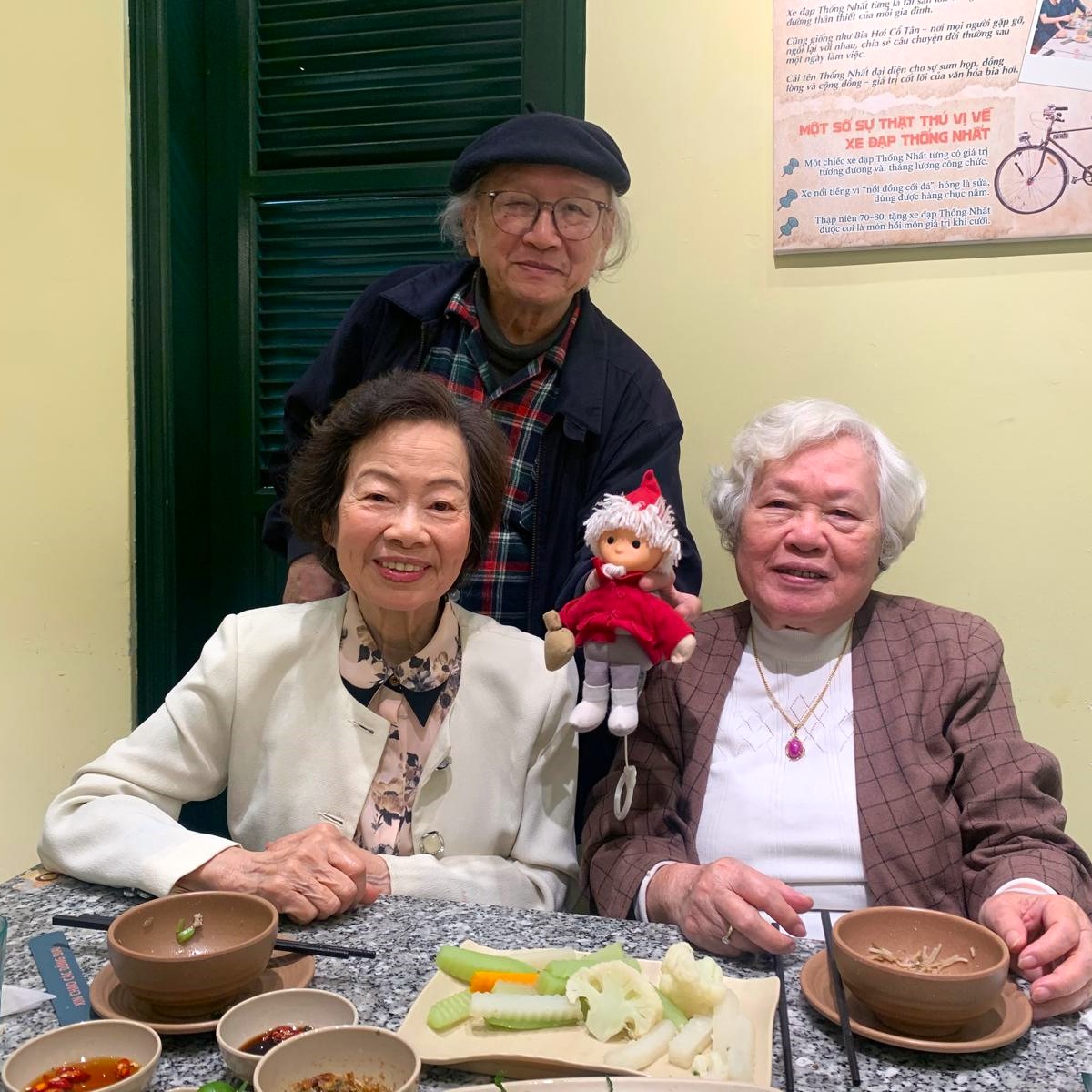
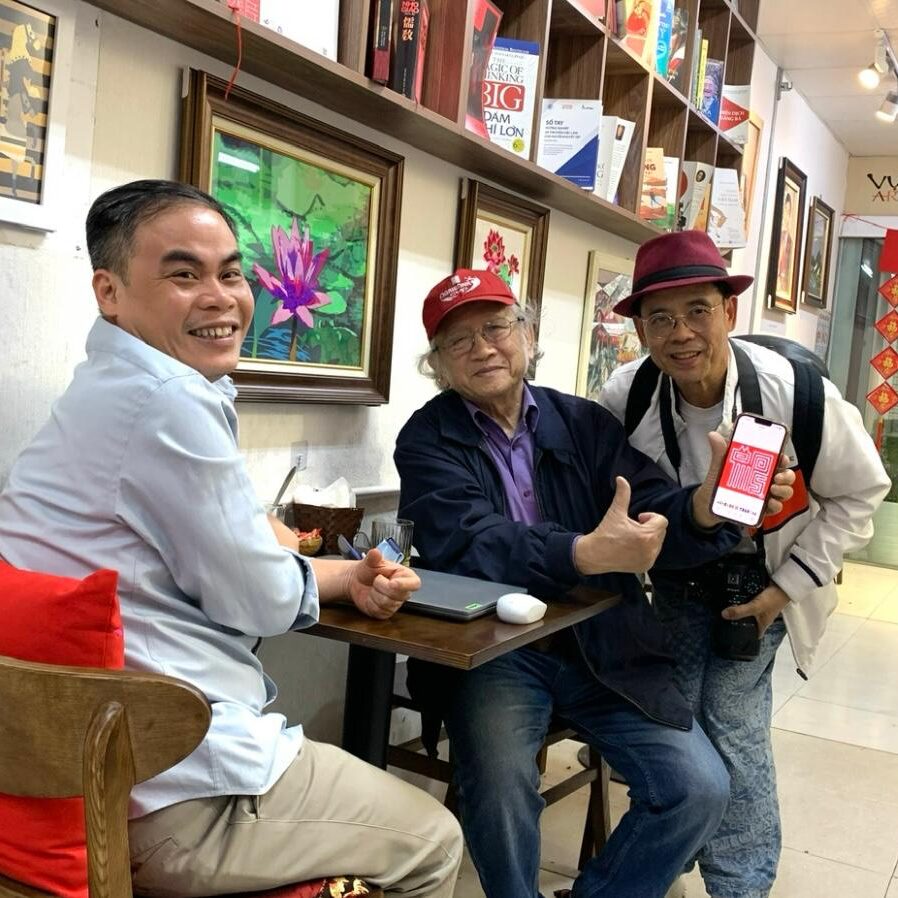
Spring 2026: Project manager Hung Cao The is on a research trip in Vietnam, meeting former contract workers, embassy staff and students in the GDR – and conducting his first interviews with eyewitnesses.
Photos: Hung Cao The
Former contract workers from Vietnam have left their mark on Saxony – yet their stories are largely unknown. With “Đức‑Việt. German-Vietnamese Life in Saxony”, we are bringing to light their experiences from the GDR era, the Peaceful Revolution, reunification and the present day. In video interviews, Vietnamese and German eyewitnesses share their stories: They talk about work and everyday life, racism and solidarity, new beginnings and lasting bonds. Their biographies reveal the GDR as a society of migration and show how closely German-Vietnamese life paths remain intertwined to this day. On this page, you will find selected background information and insights into our oral history work – bilingual, accessible and open to further contributions.
Events
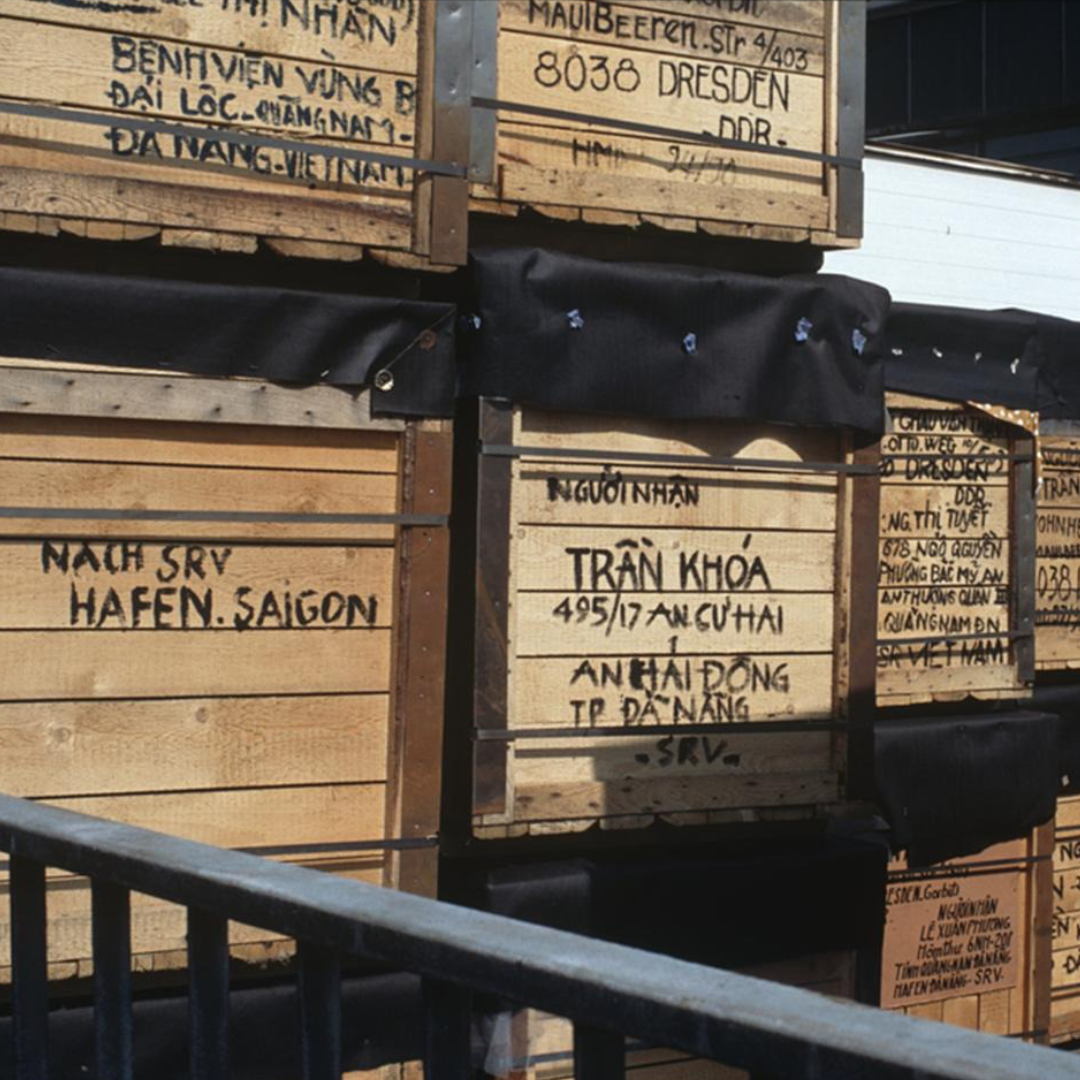
Storytelling Café: Migration and daily life in the GDR
7. October 2026, 17:30 - 19:00
Cafeteria (Gedenkstätte Bautzner Straße Dresden), Bautzner Straße 112a, Dresden
Contemporary witnesses: Hung Cao The, Luiz Mazuze
Moderator: Dr. Verena Böll
Event as part of the Intercultural Days
The GDR officially presented itself as anti-racist, yet daily life was usually quite different. The storytelling café focuses on personal perspectives on a history that is often little known: migration in a state that saw itself as internationalist, but at the same time set clear political and social boundaries.
We are looking forward to sharing our thoughts with you and with the contemporary witnesses Hung Cao The and Luiz Mazuze. The storytelling café will be hosted by Dr Verena Böll. Together with Hung Cao The, she leads our project “Đức-Việt. German–Vietnamese Life in Saxony”.
An event organised in cooperation with the Bautzner Straße Dresden Memorial.
What is “Đức‑Việt” about?
In “Đức‑Việt”, we focus on the life stories of Vietnamese contract workers and their German colleagues. They recount their everyday lives in the GDR, the Peaceful Revolution, reunification and the challenging 1990s. Interviews with contemporary witnesses reveal how closely German and Vietnamese biographies remain intertwined to this day, and which experiences have hitherto remained in the shadow of official historiography.
We document this in video interviews & project information on our website and in social media.
Together with ten to twenty eyewitnesses, we bring memories and everyday realities to light, thereby expanding the collective memory. The focus is on documenting and archiving German-Vietnamese life stories in Saxony and Vietnam (including Hanoi, Dresden, Freital and Crimmitschau). Through interviews with eyewitnesses (in video and text formats), we are preserving a part of the more than 50-year history of German-Vietnamese relations and life stories. The Vietnamese eyewitnesses include former contract workers, embassy staff, students, businesspeople and returnees. The German eyewitnesses include, amongst others, former foremen and dormitory supervisors at VEB Kinderoberbekleidung Freital, a subsidiary of VEB Textilkombinat Cottbus, and the Crimmitschau full-cloth factory.
By exploring Vietnamese life stories from before, during and after the Peaceful Revolution right up to the present day, we aim to highlight the tensions between personal success and achievements in nation-building, on the one hand, and the injustices suffered and the external control imposed by the GDR and the Socialist Republic of Vietnam, on the other.
Contemporary witnesses accounts: Voices from Vietnam and Saxony
In our video interviews, we hear from people who experienced this history first-hand: former contract workers, students, embassy staff, foremen, care home workers and businesspeople. They talk about their arrival, work, housing, racism, solidarity and building a new life in Saxony. Each biography offers a unique perspective on German-Vietnamese relations over the past 50 years.
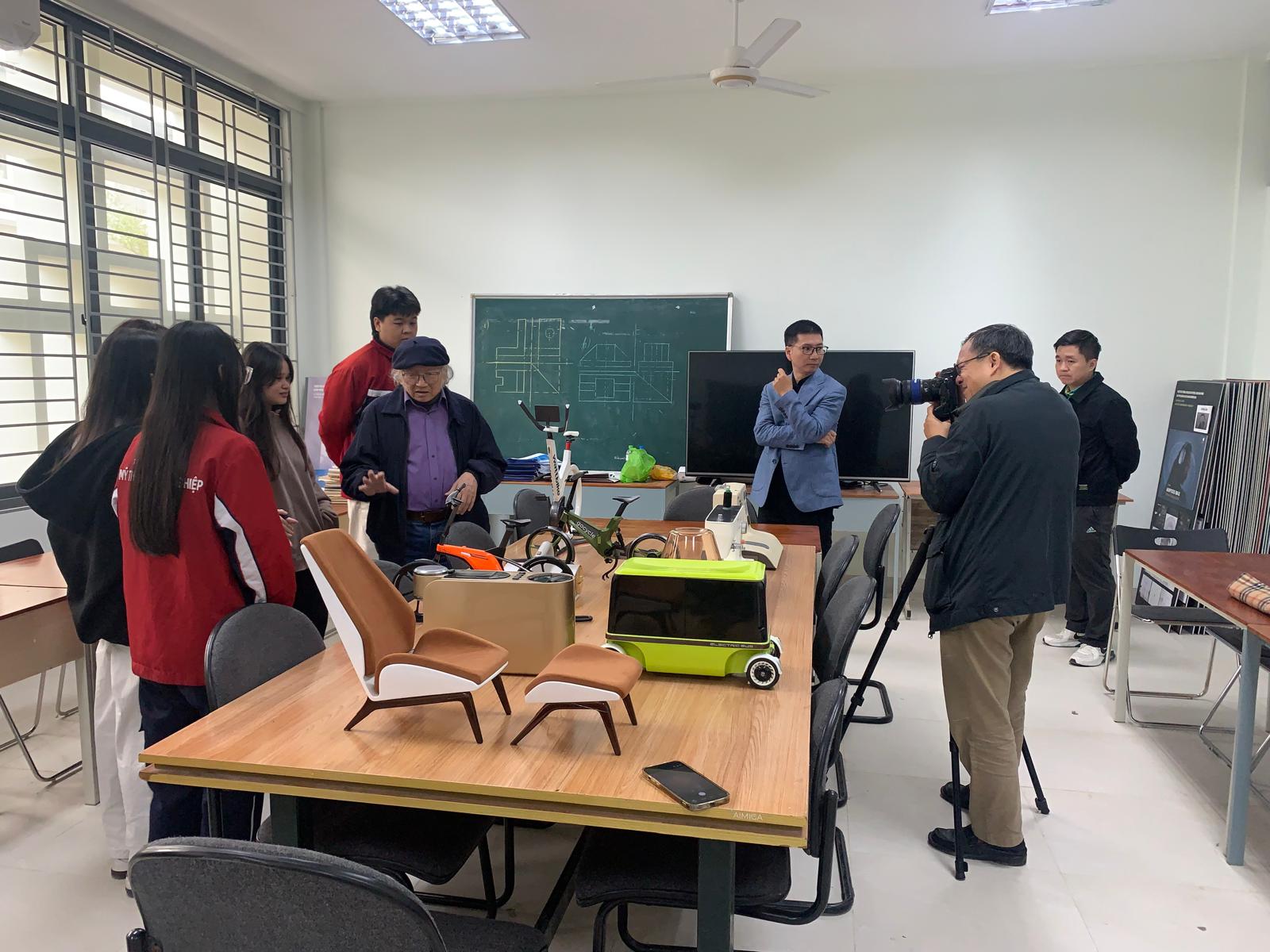
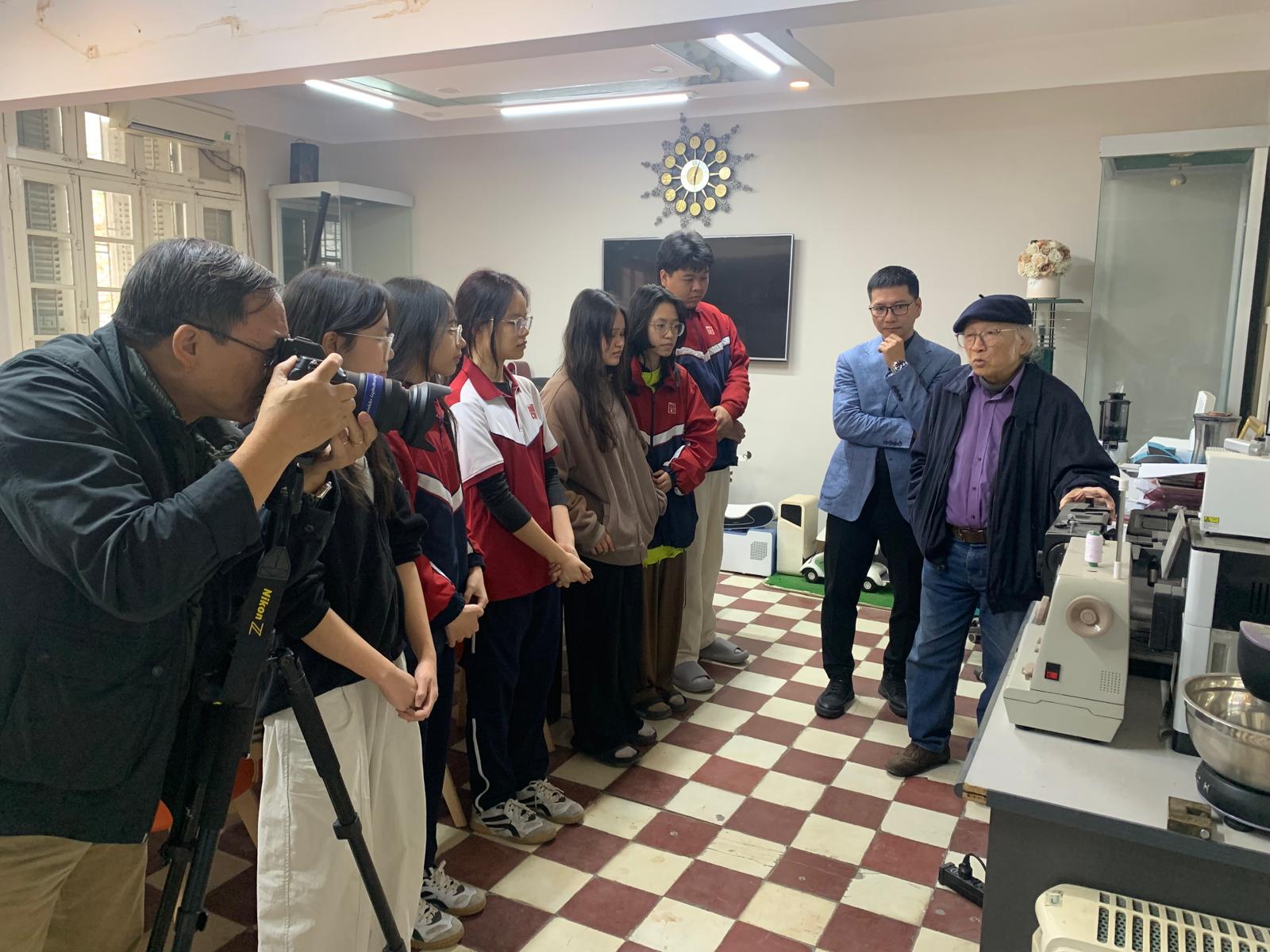
Spring 2026: Project manager Hung Cao The is on a research trip in Vietnam, meeting former contract workers, embassy staff and students in the GDR – and conducting his first interviews with eyewitnesses.
Photos: Hung Cao The
The GDR as a migration society
The GDR was shaped by emigration and immigration – yet this history of migration is scarcely present in the public consciousness. Tens of thousands of contract workers from so-called socialist brother nations, primarily from Vietnam, worked in state-owned enterprises under strict regulations and often precarious conditions. Our project work demonstrates the extent to which GDR society was influenced by migration and the ways in which these ruptures and continuities continue to have an impact to this day.
Today in Saxony: Arriving, staying, participating
Many of the former contract workers and their families now live in Saxony – as business owners, employees, active members of community groups and neighbours. Vietnamese shops, restaurants and community groups are a familiar sight on the streets and play a key role in local civil society. At the same time, their experiences of insecurity, exclusion and racist violence stand in stark contrast to their positive memories of community and new beginnings.
Our approach: oral history and biographical storytelling
We use methods from oral history and biographical research to bring to light personal experiences that are not recorded in official documents or statistics. The focus is on individuals’ stories, their memories, life transitions and perspectives. This yields multi-layered insights into German-Vietnamese history that are both useful for academic research and accessible to a wider audience.
Archiving, preserving, making accessible
The interviews are documented in video and text form, prepared in two languages and made available for research, education and the public. In addition, we collect private photographs, documents and materials that shed light on migration routes and processes of transformation. Step by step, this is creating a growing digital archive of German-Vietnamese life stories in Saxony and Vietnam.
Future plans: More stories, more connections
From 2027, we plan to launch an interview magazine, organise public events such as film screenings and discussions, and systematically digitise the materials. Together with our partners, including Weltclub / Afropa e.V., we are expanding our focus to include former contract workers from Mozambique and Angola. Our aim is to preserve the experiences of these eyewitnesses for the long term and make them accessible to new audiences.
Take part, remember, and pass it on
Đức‑Việt thrives on people who wish to share their stories and support remembrance work. We welcome eyewitnesses, partners and anyone who makes use of our programmes in education, cultural work and research. Please get in touch if you would like to get involved, provide materials or develop events with us.
Đức-Việt
German-Vietnamese life in Saxony – Contemporary witnesses from the GDR era, reunion and the present day
Period
01-12.2026
Project team
Dr. Verena Böll, Hung Cao The (project management)
Cooperation partners
Verein der Vietnamesen in Dresden e.V., Afropa – Verein für afrikanisch-europäische Verständigung e.V., Gedenkstätte Bautzner Straße Dresden – Erkenntnis durch Erinnerung e.V.
Supported by
The project is funded by Bundesstiftung zur Aufarbeitung der SED-Diktatur (Federal Foundation for the Reappraisal of the SED Dictatorship), the Ostsächsische Sparkasse Dresden and Sächsisches Staatsministerium für Soziales, Gesundheit und Gesellschaftlichen Zusammenhalt (Saxon State Ministry for Social Affairs, Health and Social Cohesion). This initiative is co-financed by taxpayers’ money under the budget approved by the Saxon State Parliament as part of the »Wir für Sachsen« funding programme.