Storytelling Café: Migration and daily life in the GDR


Bautzner Straße 112a, 01099 Dresden, Germany

Eintritt bzw. Teilnahme kostenlos
Eintritt bzw. Teilnahme kostenlos
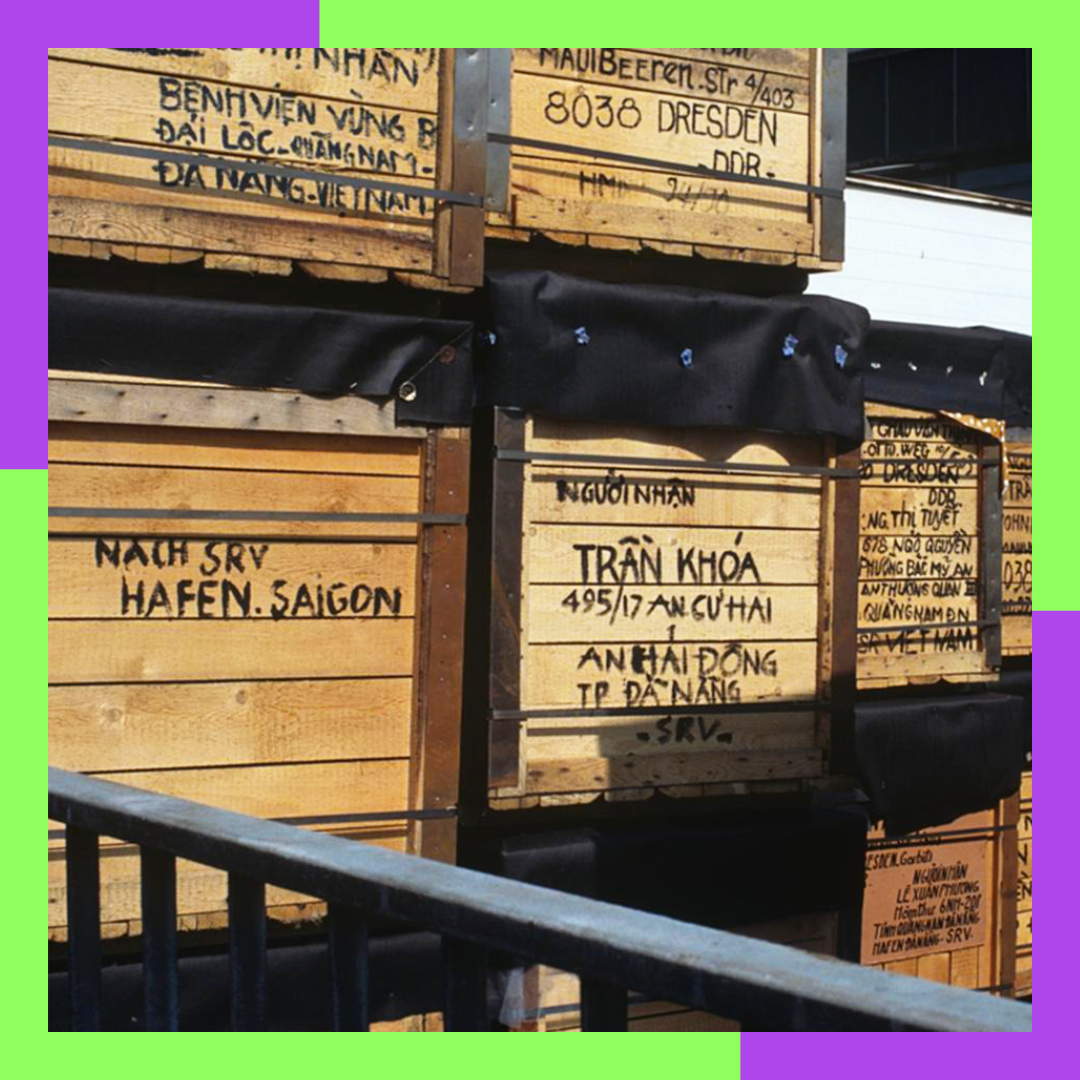
Đức-Việt. German-Vietnamese life in Saxony – Contemporary witnesses from the GDR era, reunion and the present day
The GDR officially presented itself as anti-racist, yet daily life was usually quite different. The storytelling café focuses on personal perspectives on a history that is often little known: migration in a state that saw itself as internationalist, but at the same time set clear political and social boundaries.
Contract workers from countries such as Vietnam, Mozambique and Angola lived in the GDR, as did foreign students who came to the country under governmental agreements. Their stay was regulated in many aspects – socially, professionally and privately. Contact with the local population was often limited, and a permanent right of residence was generally not provided. At the same time, there was an official discourse that portrayed racism as a problem of the ‘West’, while experiences of exclusion and discrimination in everyday life often remained invisible. In this context, the question also arises: how did state institutions deal with this? How did the Ministry for State Security view ‘foreign workers’, and how was racist violence categorised?
An event organised in cooperation with the Bautzner Straße Dresden Memorial: a place of remembrance, education and encounter. It commemorates the victims of political persecution in the Soviet Occupation Zone and the GDR, documents the stories of their lives and makes them permanently publicly accessible. It also provides a space for dialogue and interaction for people affected by these issues. Furthermore, through educational programmes, discussions, other events and exhibitions, the memorial offers opportunities to deal with a wide range of historical and contemporary topics.
The project is funded by Bundesstiftung zur Aufarbeitung der SED-Diktatur (Federal Foundation for the Reappraisal of the SED Dictatorship), the Ostsächsische Sparkasse Dresden and Sächsisches Staatsministerium für Soziales, Gesundheit und Gesellschaftlichen Zusammenhalt (Saxon State Ministry for Social Affairs, Health and Social Cohesion). This initiative is co-financed by taxpayers’ money under the budget approved by the Saxon State Parliament as part of the »Wir für Sachsen« funding programme.