Language
The Latvian language has its roots in the Baltic region and dates back several thousand years. The oldest written records in Latvian date from the 16th century, when the language was used in religious texts and translations.
It is one of the two official languages of Latvia and belongs to the Baltic language group of the Indo-European languages. It is closely related to the Lithuanian language, but not to Estonian, which belongs to the Finno-Ugric language family. In its current structure, Latvian is further removed from Indo-European than its related and neighbouring Lithuanian. However, archaic features can be found in traditional folk songs and poems (dainas), where similarities with Latin, Greek and Sanskrit are more apparent.
The language uses the Latin alphabet and has 33 letters. Latvian is known for its complex grammar, including a variety of cases and flexible word order. There are also numerous dialects spoken in different regions of Latvia. Latvian is not only the language of everyday life, but also an important element of Latvian culture and identity.
Latvian has a rich history and has been influenced by various languages, particularly German, Swedish, Russian and Polish. Even in recent history, especially during periods of Russification, the language had to fight for its survival.
- Integration into the EU: Latvia’s accession to the European Union in 2004 provided a further opportunity to strengthen the Latvian language and promote its use in international contexts.
- National movement: At the beginning of the 20th century, particularly during the national revival in the late 19th and early 20th centuries, Latvian was promoted as a symbol of national identity. The use of the language in literature, education and public affairs increased.
- Independence: Following Latvia’s declaration of independence in 1918, Latvian became the official language of the new state. This led to greater standardisation and promotion of the language in schools and institutions.
- Soviet occupation: During the Soviet occupation (1940–1941 and 1944–1990), the Latvian language experienced a period of suppression. Russian was introduced as the dominant language in administration and education, leading to a decline in the use of Latvian in certain areas.
- Regaining independence: With Latvia regaining its independence in 1990, Latvian was once again made the official language. This led to a renaissance of the Latvian language, as it was promoted in education, the media and public institutions.
Audio sample
ANSPRECHBAR
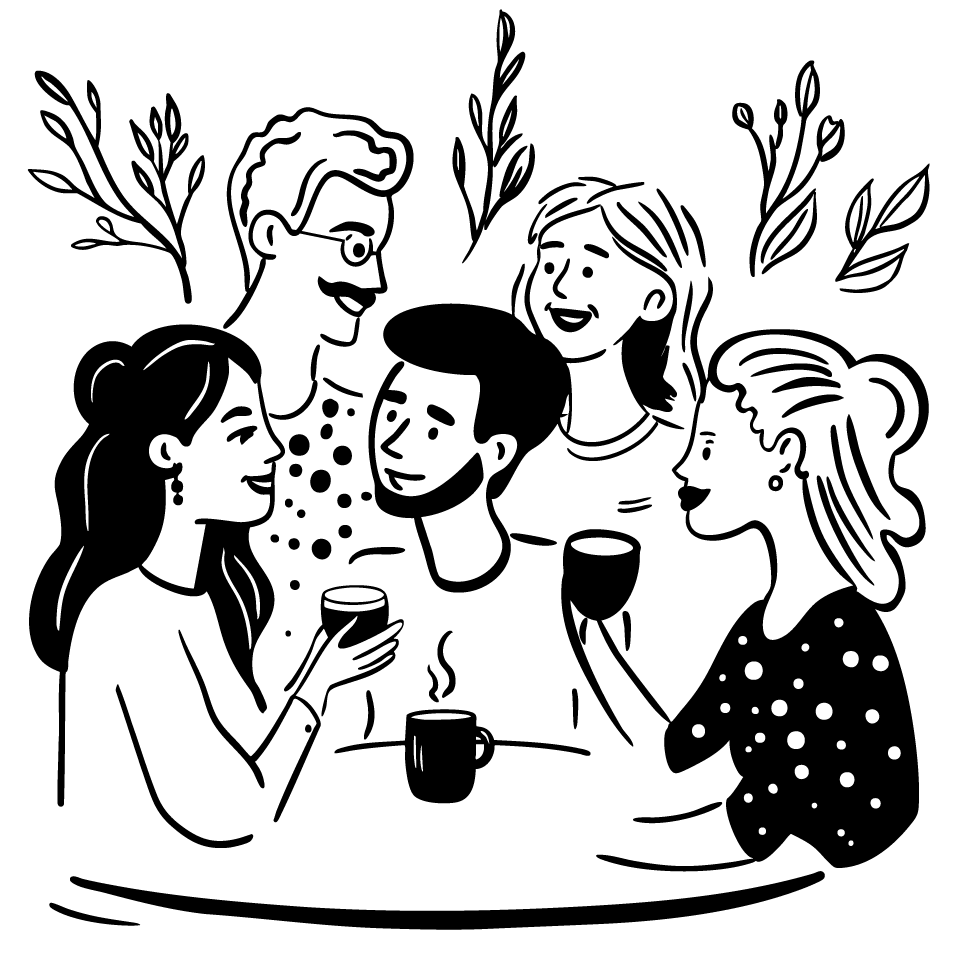
We are ANSPRECHBAR – for a better understanding! We get people talking – regardless of language, culture, age, budget or social status – at creative workshops, exhibitions and in an interview magazine with empathetic portraits. Join us and let’s build bridges together!
Period
01-12.2025
Project team
Yvonn Spauschus (project management)
Yulia Vishnichenko · Moussa Mbarek · Nadine Wölk · Rosa Brockelt · Bela Álvarez (workshop leader)
Rosa Hauch · Birthe Mühlhoff (moderation, documentation)
Cooperation partners
JugendKunstschule Dresden – Standort Passage, Omse e.V., Malteser Hilfsdienste e.V., Montagscafé am Staatsschauspiel Dresden, Umweltzentrum Dresden – ABC Tische, Internationale Gärten Dresden e.V, Uniwerk e.V. (Pirna), Buntes Meißen Bündnis Zivilcourage e.V. and many more
Supported by
The project is funded by Heidehof Stiftung GmbH and the State Ministry for Social Affairs and Social Cohesion. This measure is co-financed with tax funds on the basis of the budget passed by the Saxon state parliament within the framework of the state programme Integrative Maßnahmen.