Language
Portugal is located on the outer edge of the Roman Empire, where Latin was spoken, and is now a small country in western Europe. During the era of European colonisation, however, the Portuguese were a great seafaring nation. In 1415, they conquered their first city outside Europe, and between 1500 and 1650, the Portuguese crown’s possessions extended far into the interior of South America, Africa and Southeast Asia.
This history explains why Portuguese is now spoken not only in Portugal, where around 10.6 million people live, but also by over 240 million people worldwide as their mother tongue. Countries where Portuguese is widely spoken include Brazil, Angola, Equatorial Guinea, Guinea-Bissau, Cape Verde, Mozambique, São Tomé and Príncipe, as well as Macau and East Timor in Asia. Approximately 1,000 people who speak Portuguese live in Dresden.
Although the indigenous people retained their own languages until a ban in 1775, Portuguese became the official language of the country. Over the centuries, ever greater differences developed between the Portuguese spoken in Portugal and that spoken in Brazil, particularly in pronunciation and grammar, with some expressions from the indigenous languages also being mixed in.
Audio sample
Script
With the arrival of the Portuguese in the 16th century, Christianity, particularly Catholicism, became the dominant religion. Missionaries played a central role in education and the introduction of the Latin alphabet. Some missionaries even developed writing systems for indigenous languages in order to translate religious texts and bring Christianity closer to the indigenous peoples.
In Brazil, the Latin alphabet, consisting of 26 letters, is mainly used. This alphabet is identical to that used in most Western languages. However, there are some peculiarities in Brazilian spelling and pronunciation.
ANSPRECHBAR
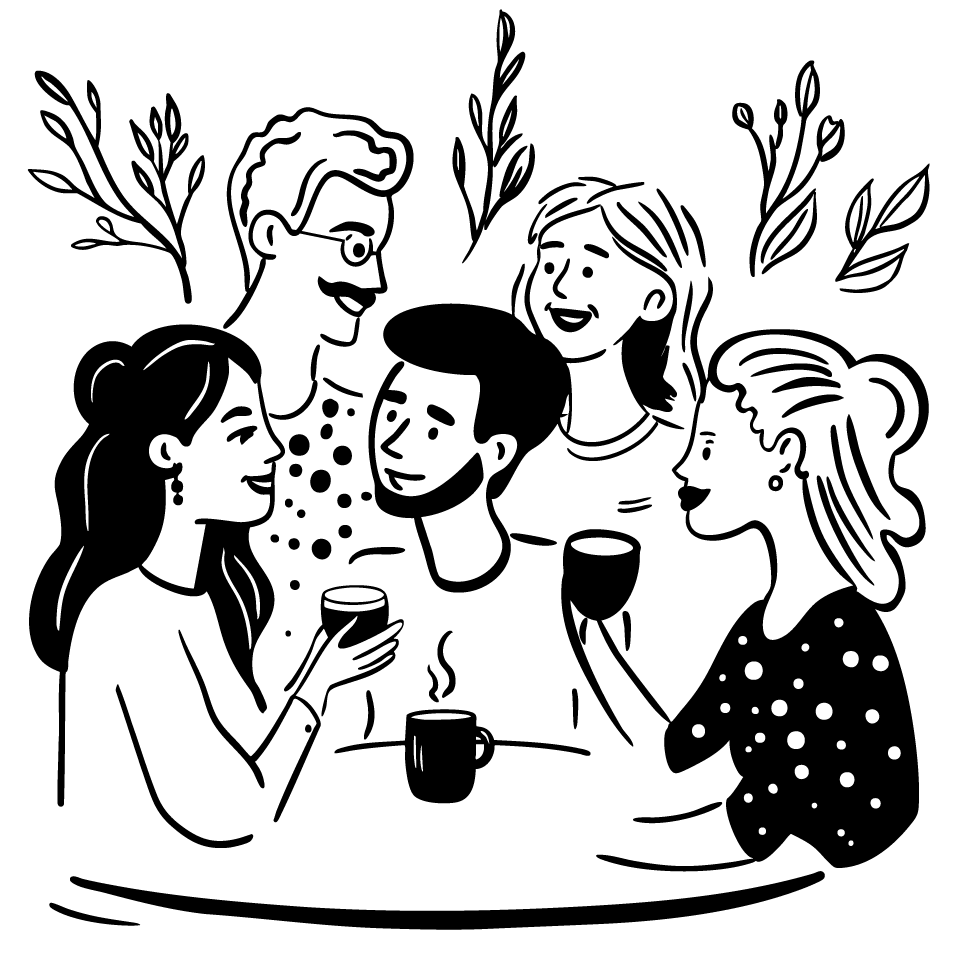
We are ANSPRECHBAR – for a better understanding! We get people talking – regardless of language, culture, age, budget or social status – at creative workshops, exhibitions and in an interview magazine with empathetic portraits. Join us and let’s build bridges together!
Period
01-12.2025
Project coordination
Yvonn Spauschus (project management)
Yulia Vishnichenko · Moussa Mbarek · Nadine Wölk · Rosa Brockelt · Bela Álvarez (workshop leader)
Rosa Hauch · Birthe Mühlhoff (moderation, documentation)
Cooperation partners
JugendKunstschule Dresden – Standort Passage, Omse e.V., Malteser Hilfsdienste e.V., Montagscafé am Staatsschauspiel Dresden, Umweltzentrum Dresden – ABC Tische, Internationale Gärten Dresden e.V, Uniwerk e.V. (Pirna), Buntes Meißen Bündnis Zivilcourage e.V. and many more
Supported by
The project is funded by Heidehof Stiftung GmbH the State Ministry for Social Affairs and Social Cohesion. This measure is co-financed with tax funds on the basis of the budget passed by the Saxon state parliament within the framework of the state programme Integrative Maßnahmen.