Text: Hùng Cao Thê
Edited by: Irina Nekrasov ( missingdots.de / Instagram ) & Kultur Aktiv e.V.
Images, video: Hùng Cao Thê
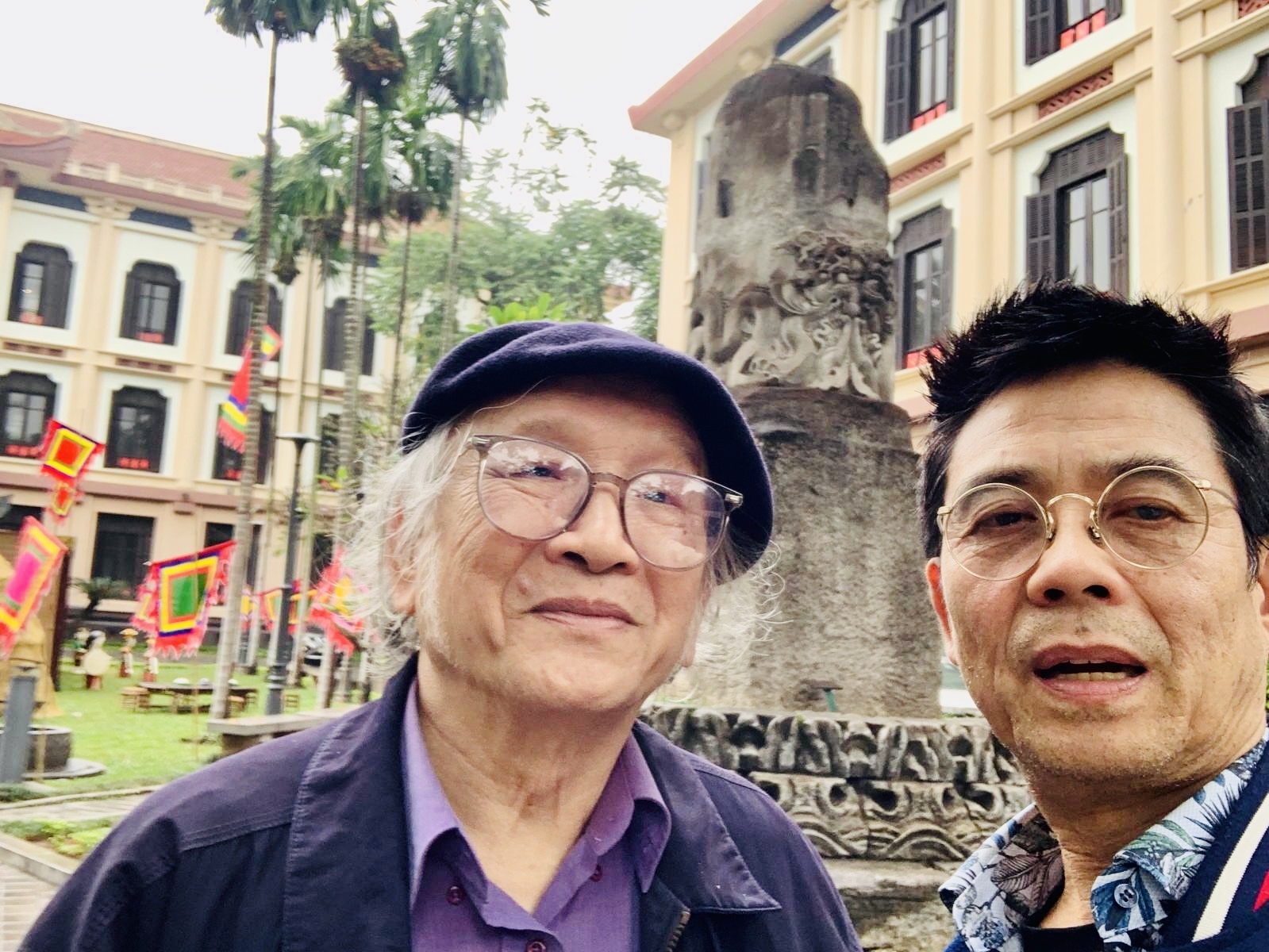
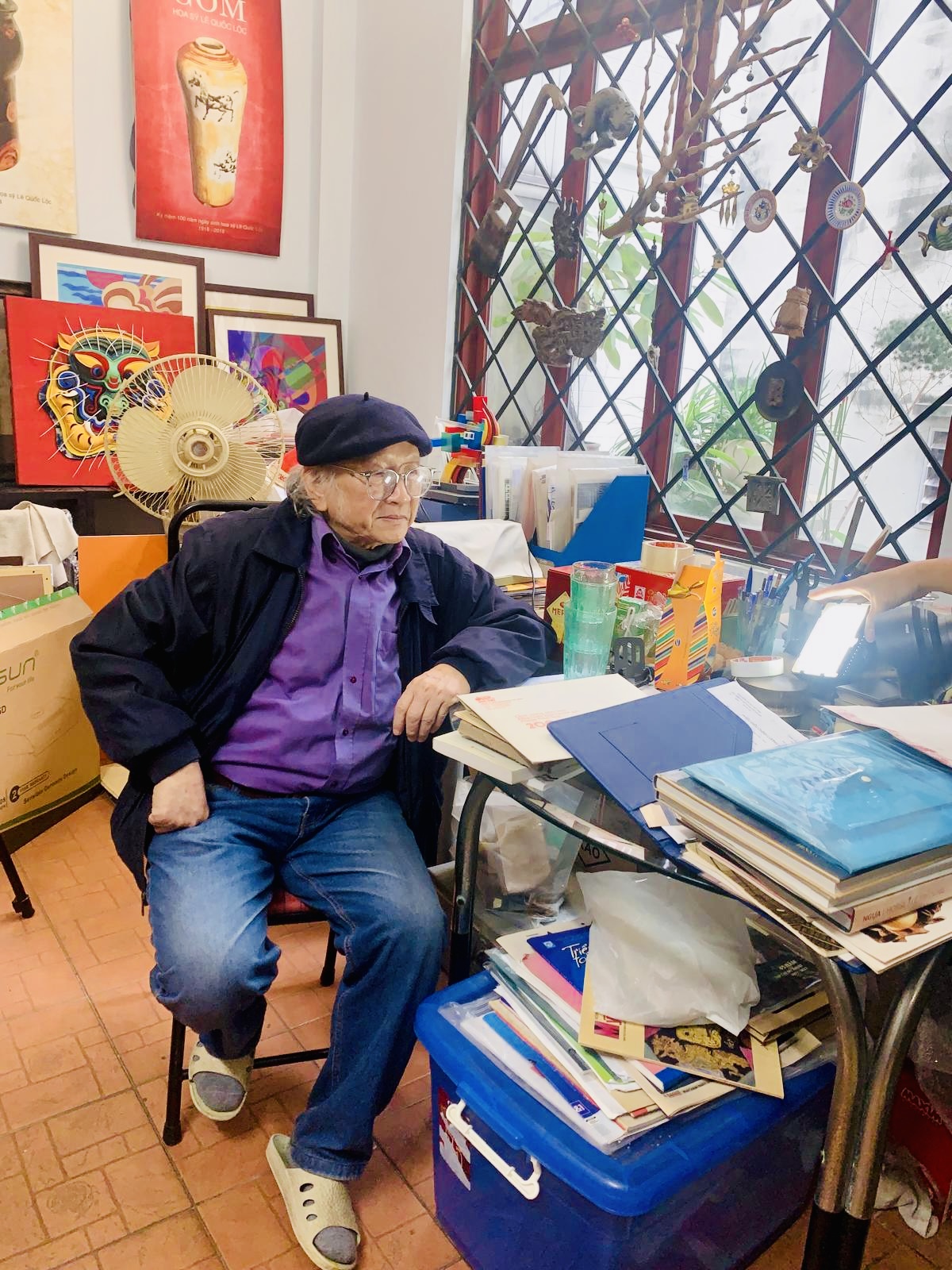
Hùng Cao Thê meets many contemporary witnesses in Vietnam. One of them is Lê Huy Văn (left).
After a 12-hour flight, we landed in Hanoi on 15 January.
The house where I was born is situated in a small lane. As my parents are no longer with us, it was unusually quiet. First of all, I let my relatives know that we had arrived in Vietnam. We got together for a small celebration. My relatives were delighted that we had arrived. It was particularly lovely for me to meet my older sister, who lives in France and whom I hadn’t seen for a long time. After the long journey, we spent a few days resting first. After that, we went to the cemetery. This is a Vietnamese tradition: when we children have been away from home for a long time, we visit the graves of our parents and relatives.
In Thái Nguyên, a town about 70 km from Hanoi, my wife’s mother has been living in a retirement home for several years. We are very pleased and happy about this, as she is very well taken care of there. We commuted daily between Hanoi and Thái Nguyên. This was possible because the taxi fare is very cheap: the equivalent of just €6.00 for a 70 km journey.
In Hanoi, we could already get a feel for the preparations for the New Year celebrations (Tết). There were plenty of cultural events centred around Tết Nguyên Đán. People were doing a lot of grocery shopping. And at home, too, they were busy getting ready for the festivities. One of the traditions of the Tết festival is making bánh chưng, sticky rice cakes. We did this together with the children.
In Hanoi, I had plenty of opportunities to visit museums, cultural sites and craft villages. Free buses were available for people aged 60 and over.
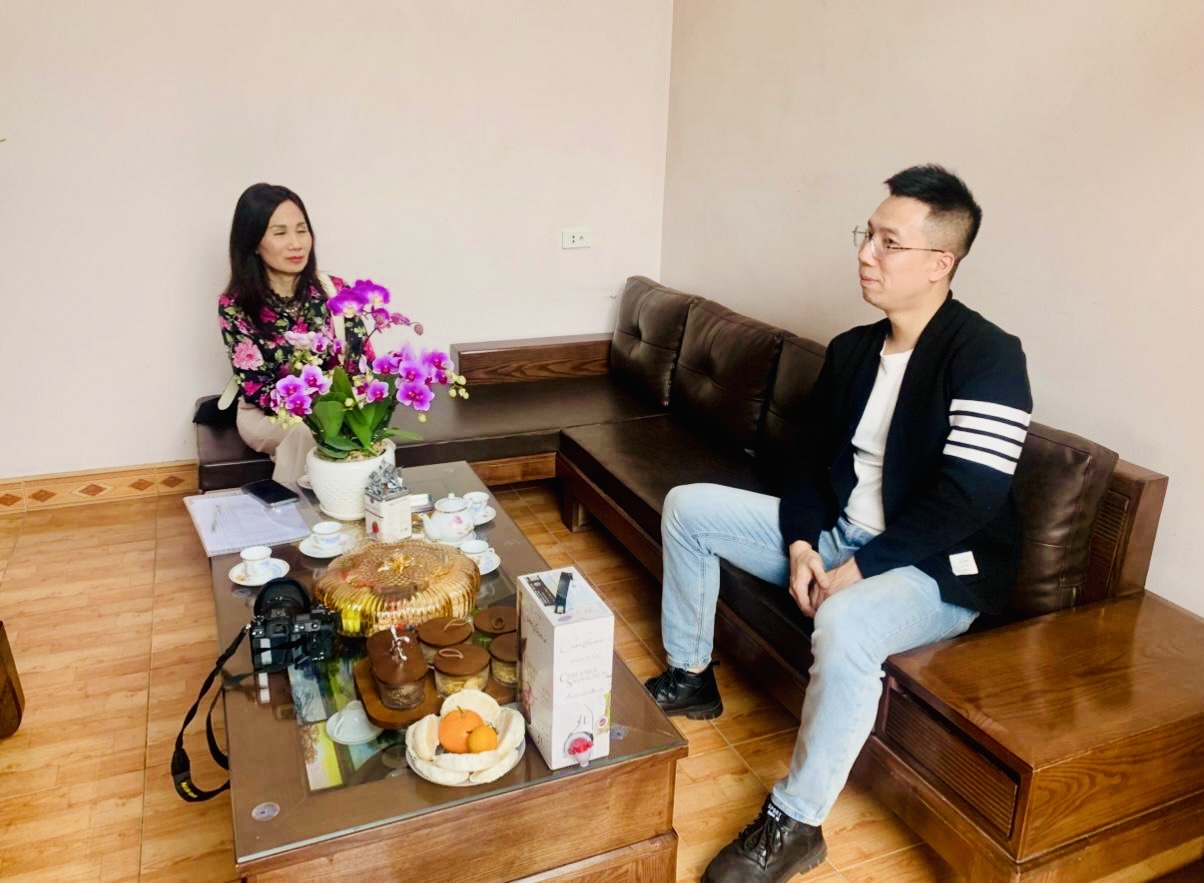
Video: Here is a brief glimpse of the conversation with Lê Mai (left) and Cù Huy Phán Táo.
As part of our project, we met many contemporary witnesses from Vietnam who had lived in the GDR. We met the artist and industrial designer Lê Huy Văn. Together with Mrs Cù Huy Phán Táo and Lê Mai, he was in Dresden 70 years ago. I interviewed and filmed them. I also met the women who used to work with me at the VEB Kinderoberbekleidung in Freital. They told me that they would like to attend the celebrations marking the 40th anniversary.
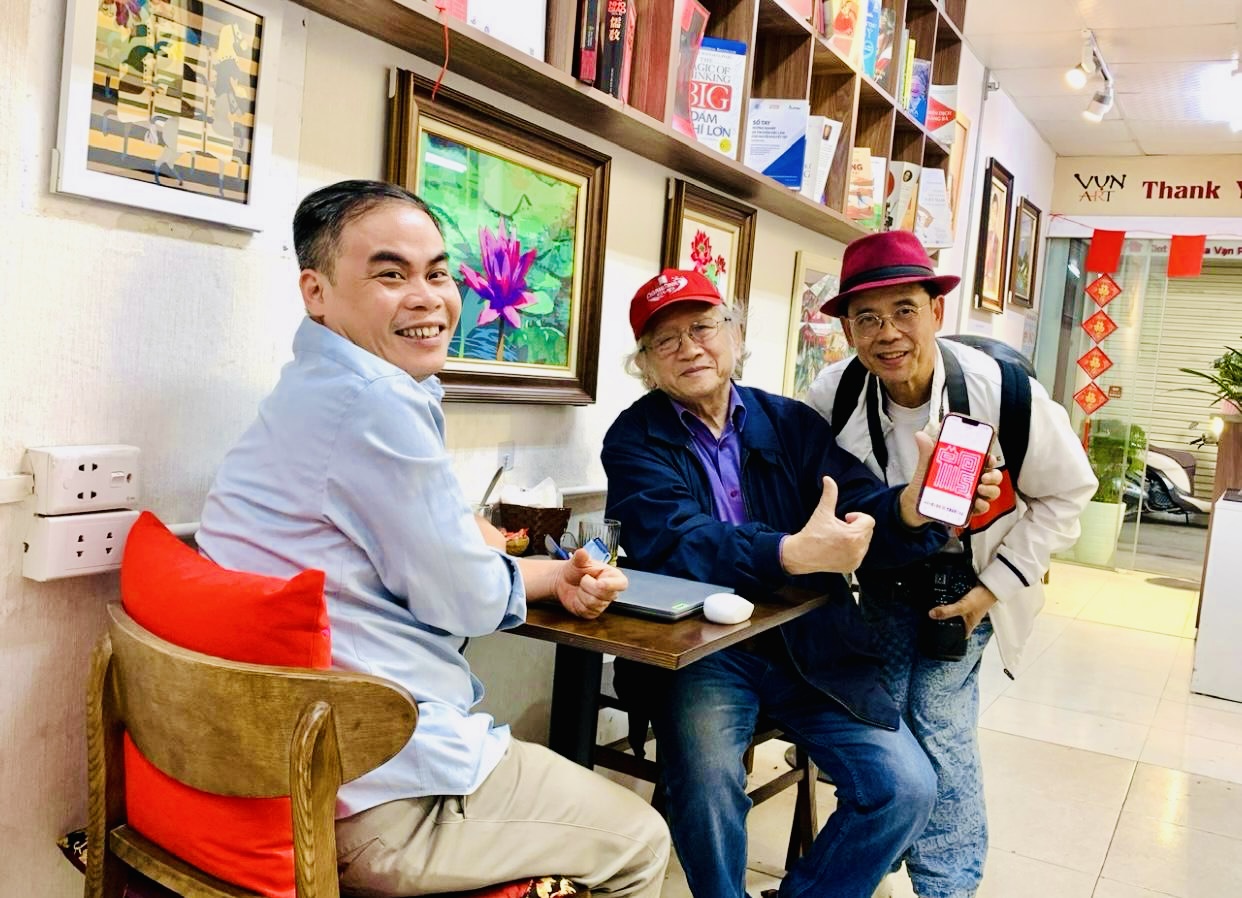
The artist and industrial designer Lê Huy Văn was one of the ‘Moritzburg children’ who came to Dresden and Moritzburg from Vietnam in the 1950s (picture 1).
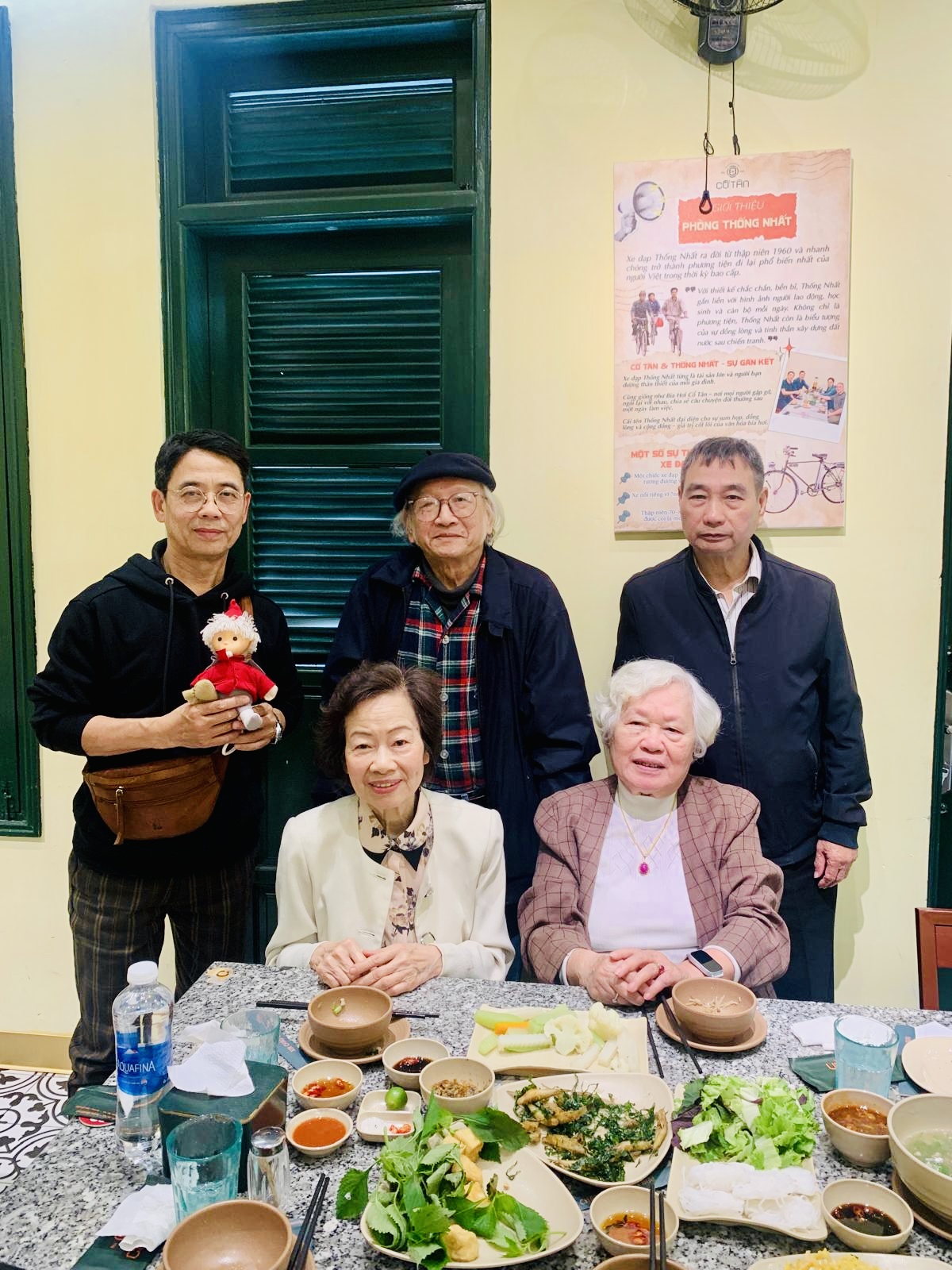
Mrs Lê Mai (left) and Mrs Cù Huy Phán Táo are also among the former schoolgirls being interviewed about their time in the GDR (picture 2).
Video: Oanh Sänger, one of our contemporary witnesses, and her German husband are currently on holiday in Vietnam. Hùng Cao Thê visits her and her family in Nam Định, near Hanoi. In 2001, Oanh Sänger first moved to Braunschweig, where her husband worked as an electrician for Deutsche Bahn. When he retired in 2018, they moved to his hometown, Dresden.

In Thái Nguyên, Hùng Cao Thê met Mrs Thu, who was also employed in Freital during the GDR era (picture 1).
She was deported because she had become pregnant. Her son is now 36 years old (picture 2).
I also met the paint artist Vinh, who visited Dresden last year.
He designed a poster for our event marking 40 years of diplomatic relations between Germany and Vietnam. He now lives in Hanoi with his wife, and they run a coffee shop. Afterwards, we visited Mrs Oanh and her large family in Tràng An. Together, we took a boat trip through the beautiful landscape of the UNESCO World Heritage Site. In Thái Nguyên, I met Mrs Thu, who had also been in Freital back then. She was deported because she had become pregnant. Her son is now 36 years old. I think her son is grateful that his mum didn’t have an abortion.
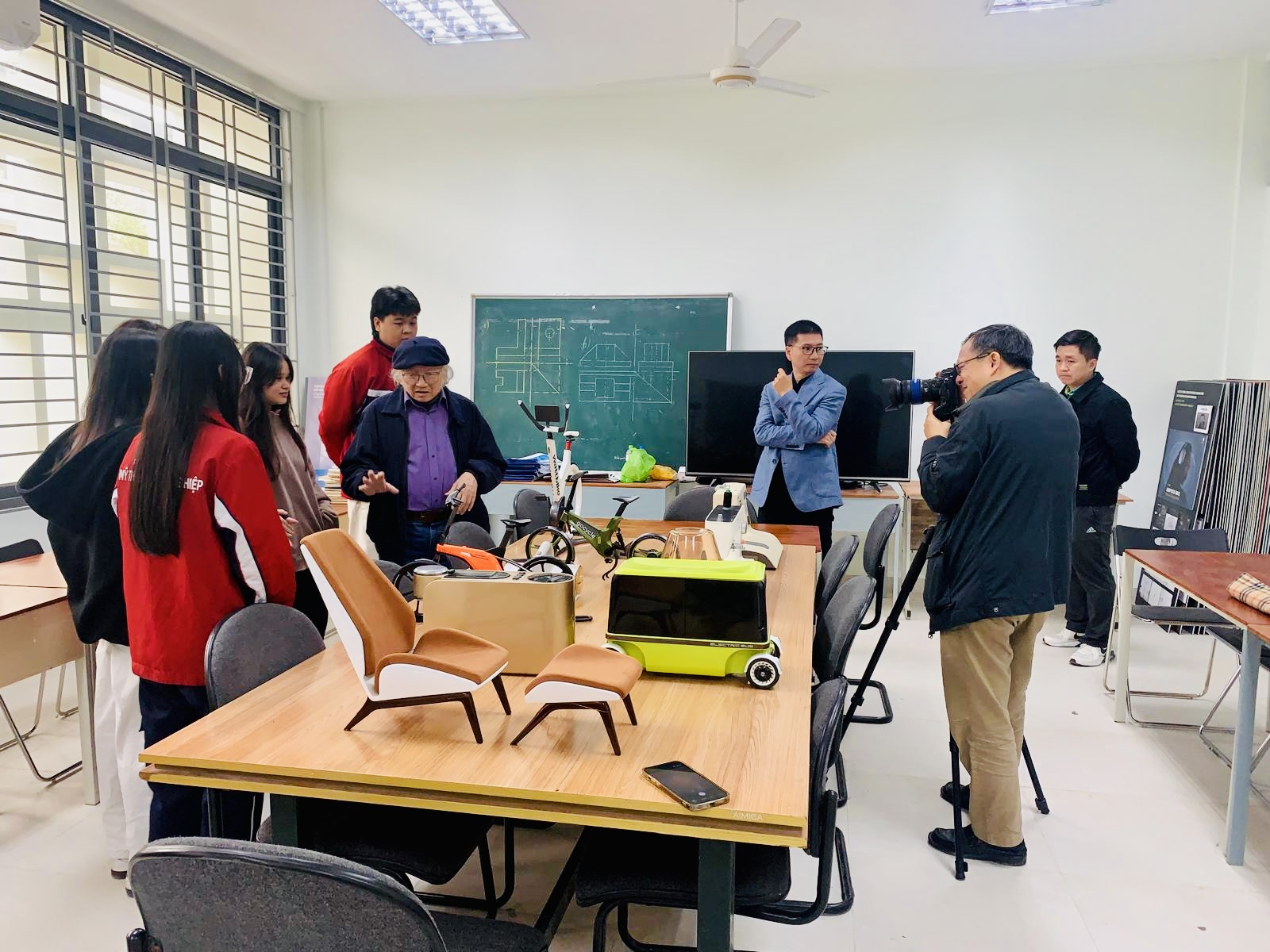
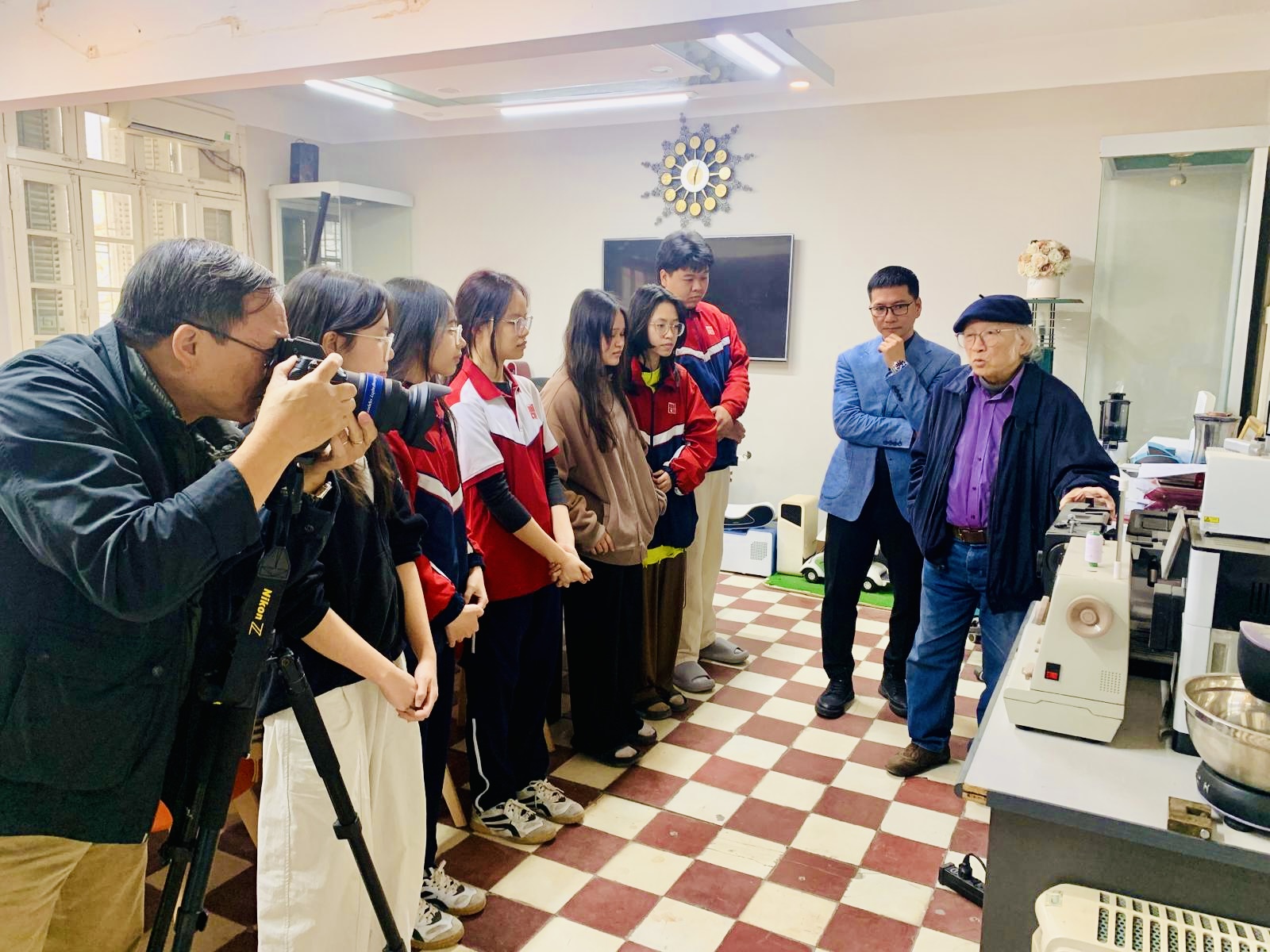
Lê Huy Văn is showing us and the students various design products.
I’d like to talk once again about the artist and industrial designer Lê Huy Văn. He was one of the children who came to the GDR in 1955. Later, he studied art and design in the GDR. I visited him at his home and at the University of Industry and Design. He showed me two workrooms for children with disabilities, which he founded and supervises closely. In one workroom, the children were making items from silk offcuts; in the other, from wool. The children use both materials to create pictures.
As well as his artworks, Lê Huy Văn also showed me his design products, such as the Sufat motorbike-moped. He showed me industrial machinery, archive material and art prints. Lê Huy Văn would like to exhibit his work in Germany.
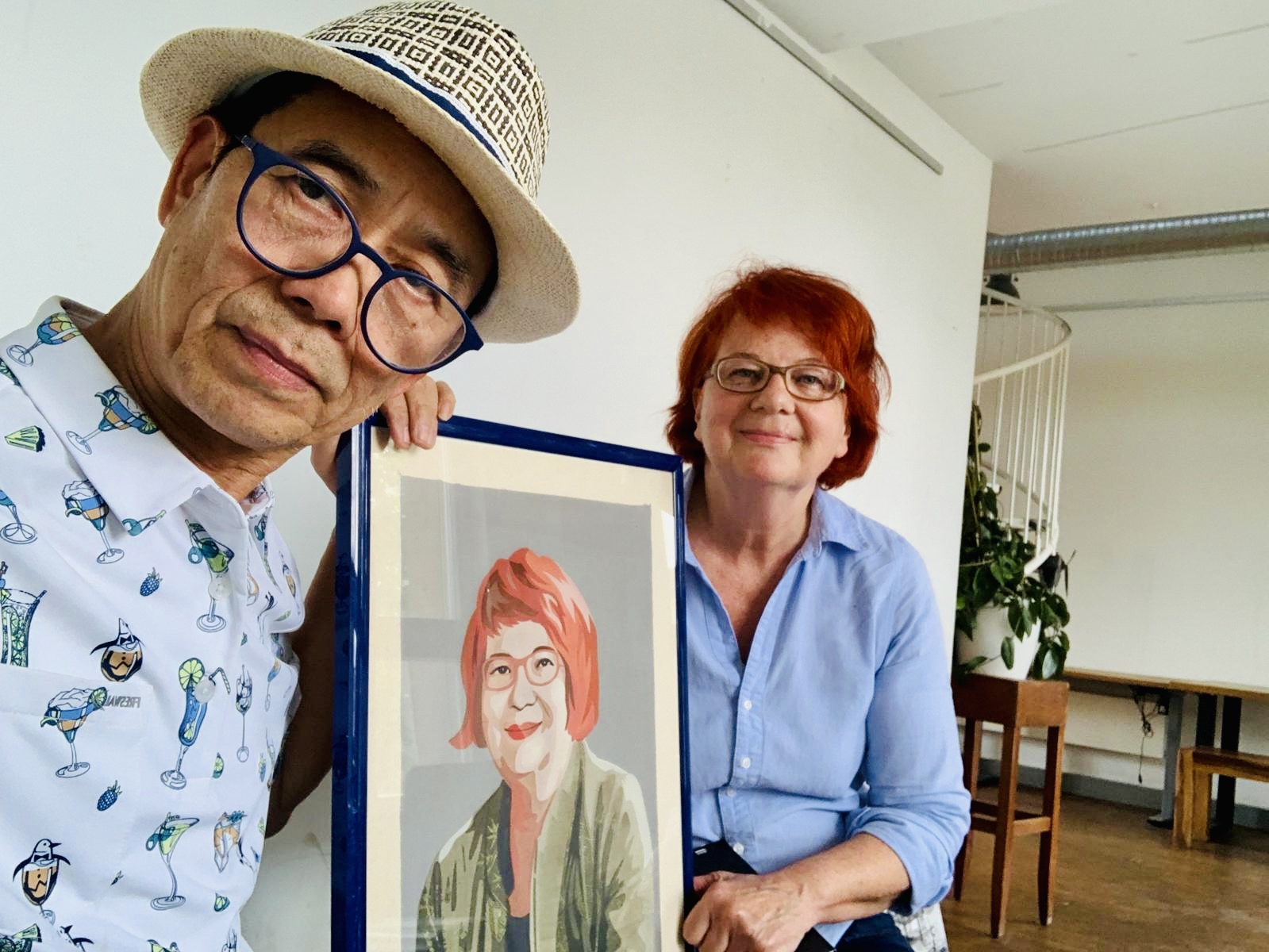
You can’t return from a wonderful trip without some souvenirs and warm regards. Hùng Cao Thê gives co-project leader Dr Verena Böll a work of art by Lê Huy Văn.
During the final days of my stay in Vietnam, I was able to speak to many conteporary witnesses: interns, medical and art students, PhD candidates and so on. My impression was that they are very happy with their lives.
This is a brief insight into my trip to Vietnam.
Đức-Việt
German-Vietnamese life in Saxony – Contemporary witnesses from the GDR era, reunion and the present day
Period
01-12.2026
Project team
Dr. Verena Böll, Hùng Cao Thê (project management)
Cooperation partners
Verein der Vietnamesen in Dresden e.V., Afropa – Verein für afrikanisch-europäische Verständigung e.V., Gedenkstätte Bautzner Straße Dresden – Erkenntnis durch Erinnerung e.V.
Supported by
The project is funded by Bundesstiftung zur Aufarbeitung der SED-Diktatur (Federal Foundation for the Reappraisal of the SED Dictatorship), the Ostsächsische Sparkasse Dresden and Sächsisches Staatsministerium für Soziales, Gesundheit und Gesellschaftlichen Zusammenhalt (Saxon State Ministry for Social Affairs, Health and Social Cohesion). This initiative is co-financed by taxpayers’ money under the budget approved by the Saxon State Parliament as part of the »Wir für Sachsen« funding programme.