Language
The Romanian language developed from the Vulgar Latin dialect spoken in the region of Dacia before it was conquered by the Romans in the 2nd century AD. After the Roman conquest of Dacia, the region was Romanised and the local population began to adopt the Latin language. After the Romans withdrew in 271 AD, the area was settled by various peoples, including Goths, Slavs and others. These influences led to changes in the language. During this period, Romanian continued to evolve, absorbing influences from various languages, including Greek, Turkish and Hungarian, due to political and cultural contacts in the region. A phase of standardisation began in the 17th and 18th centuries. Many words from French and Italian were also incorporated.
Approximately 2,200 Romanian-speaking people live in Dresden. Worldwide, Romanian is spoken as a native language by approximately 24 to 26 million people.
Script
Written documentation of the Romanian language dates back to the 16th century. The oldest known texts in Romanian are from this period, including the Codexul Voronețean from 1521, which is considered the oldest surviving Romanian document.
Originally, Romanians used the Cyrillic alphabet, which was adapted for the Romanian language in the 19th century.
In 1860, however, the Latin alphabet was introduced to standardise the Romanian language and strengthen cultural and linguistic ties with Western Europe. The modern Romanian alphabet consists of 31 letters and uses the Latin writing system, supplemented by a few diacritical marks to represent specific sounds in the Romanian language.
ANSPRECHBAR
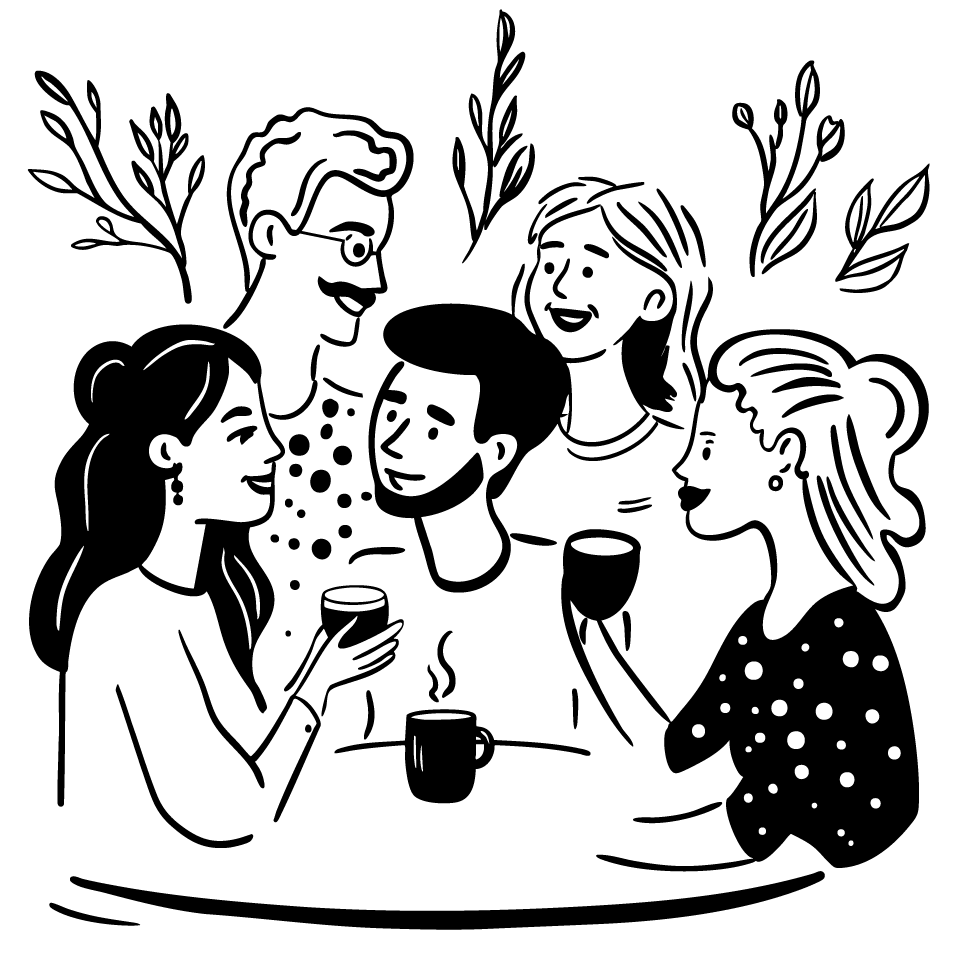
We are ANSPRECHBAR – for a better understanding! We get people talking – regardless of language, culture, age, budget or social status – at creative workshops, exhibitions and in an interview magazine with empathetic portraits. Join us and let’s build bridges together!
Period
01-12.2025
Project coordination
Yvonn Spauschus (project management)
Yulia Vishnichenko · Moussa Mbarek · Nadine Wölk · Rosa Brockelt · Bela Álvarez (workshop leader)
Rosa Hauch · Birthe Mühlhoff (moderation, documentation)
Cooperation partners
JugendKunstschule Dresden – Standort Passage, Omse e.V., Malteser Hilfsdienste e.V., Montagscafé am Staatsschauspiel Dresden, Umweltzentrum Dresden – ABC Tische, Internationale Gärten Dresden e.V, Uniwerk e.V. (Pirna), Buntes Meißen Bündnis Zivilcourage e.V. and many more
Supported by
The project is funded by Heidehof Stiftung GmbH the State Ministry for Social Affairs and Social Cohesion. This measure is co-financed with tax funds on the basis of the budget passed by the Saxon state parliament within the framework of the state programme Integrative Maßnahmen.