On the way to Columbus, I had to change planes several times, and the very first flight was already late. By chance, a young man was sitting next to me. As usual, they handed out the standard chocolate bar at some point while we were above the clouds. Since I don’t eat it and the guy next to me is extremely slim, I offered it to him. From that moment on, we chatted away for the rest of the flight. Marcin was on his way to France; I was headed to America. In Frankfurt, we both ran off in our respective directions and promised to write each other postcards. Funny, isn’t it? These days, there’s a lot of discussion online and in the relevant committees, in a very analog way, about whether children should even still learn cursive. But that’s a different topic. Our topics were music, sports, and work, and the rest of the flight flew by.
Months later, his invitation to all friends and acquaintances for his bachelor’s recital arrived. I was there, too. How lovely. And the recital was impressive. I dare say that bachelor’s students in other disciplines don’t have to achieve nearly as much to pass their final exam. Performances in at least four languages, different styles, and absolute stage presence. After the concert, the best sentence of all, no, not “The buffet is open,” but “The exam has been passed.”
The audience – international, musically inclined, and very pleasant. I wouldn’t have been surprised if I’d been the only one in the room who couldn’t sing.
Black and white to take home
A few days later, I finally had time to read his program booklet. That was also part of the exam requirements. The expectation is to list all the performances, just as is customary for concerts. In addition, translations of the text and brief descriptions must be noted, including the composer, their dates of birth, a list of their works, and information about the poet who wrote the text. Marcin also had the idea of writing a short reflection on each work and its focus.
What I found particularly interesting, however, were the sections on the artists’ biographies and the acknowledgments. Here, Marcin mentions his stage speech teachers quite early on, and that he is very proud when strangers ask him which city he is from. Speaking without an accent is so important to Marcin that I had to ask him about it.
“It’s very important to speak without an accent on stage, since you’re performing in front of native speakers, and it really bothers them when an accent distorts intonation and sentence structure,” he says.
The journalist is amazed, and the instructor is puzzled. I hear accents every day in my classes, and during the first few sessions, my challenge is to try to figure out where the person is from. It’s as natural as standing up, erasing the board, or breathing, I think, while Marcin gets worked up. He thinks back to his unpleasant experiences during salary negotiations for jobs and similarly traumatic incidents.
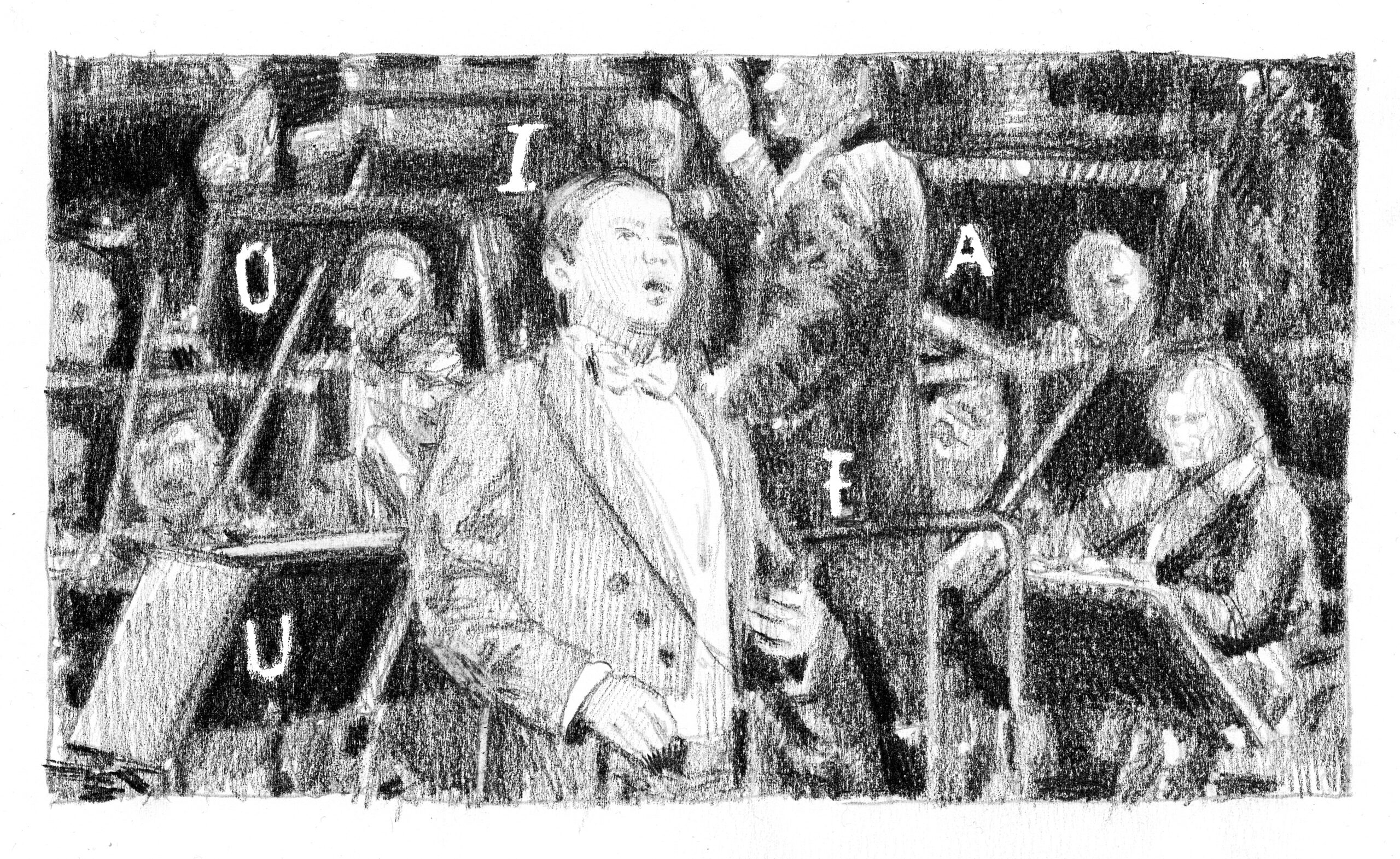
The key to training is the vowels
“What I find interesting is that the hardest part is getting the accent out of the vowels.” Once you’ve managed that, you’d be invited out much more often and taken seriously. Marcin’s experiences alarm me. Excuse me, here, where so many people speak Saxon? Is Saxon socially acceptable, as it was in Luther’s time, when Saxon was the source of the standard language?
Learning a language and learning pronunciation are two different things, after all.
If we ask German teachers, there’s never enough time to practice proper pronunciation. If we ask Marcin, he’s been working on it for four years, and no sooner does he meet his girlfriend than his Saxon accent slips unnoticed into their breakfast conversations, and his speech lessons take on a new dynamic.
Marcin says: “Speaking without an accent is important in business meetings, politics, or on the theater stage. It’s part of self-confidence.” Unpleasant people reduced non-native speakers to their lack of language skills. Seriously?
“Of all the ‘language tests’ I’ve taken while living abroad, I found arguing in the heat of the moment the most difficult,” Marcin sums up, recommending, “You also have to learn not to let yourself be intimidated. And it’s extremely important to have the courage to keep asking for clarification, even if you haven’t understood something four times in a row. Everything can be rephrased, spoken more clearly, or made clearer. Nodding when you don’t understand doesn’t help either of you. Sometimes you just don’t have the energy or patience to ask again, but in general, you should try to make yourself understood.”
So soon after passing his exam, it’s time for Marcin to pack his bags. He’s heading to Austria for the summer months.
I’d love to join him. And while we native speakers get into the rhythm of things or pick up on it, Marcin says, “My mind clears up when I’m there and I get into the flow.”
That’s good. I have a beautiful image in my mind.
Rosa Hauch
ANSPRECHBAR
Wir sind ANSPRECHBAR – für ein besseres Miteinander! Wir bringen Menschen ins Gespräch – unabhängig von Sprache, Kultur, Alter, Geldbeutel oder sozialer Stellung – bei kreativen Workshops, Ausstellungen und in einem Interview-Magazin mit einfühlsamen Porträts. Seid dabei und lasst uns gemeinsam Brücken bauen!

Zeitraum
01-12.2025
Projektbeteiligte
Yvonn Spauschus (Projektleitung)
Yulia Vishnichenko · Moussa Mbarek · Nadine Wölk · Rosa Brockelt · Bela Álvarez (Workshopleitung)
Rosa Hauch · Birthe Mühlhoff (Moderation und Dokumentation)
Kooperationspartner:innen
JugendKunstschule Dresden – Standort Passage, Omse e.V., Malteser Hilfsdienste e.V., Montagscafé am Staatsschauspiel Dresden sowie Umweltzentrum Dresden – ABC Tische, Internationale Gärten Dresden e.V, Uniwerk e.V. (Pirna), Buntes Meißen Bündnis Zivilcourage e.V. und viele mehr
Gefördert durch
Das Projekt wird gefördert durch die Heidehof Stiftung GmbH und das Staatsministerium für Soziales und Gesellschaftlichen Zusammenhalt. Diese Maßnahme wird mitfinanziert mit Steuermitteln auf Grundlage des vom Sächsischen Landtag beschlossenen Haushaltes im Rahmen des Landesprogrammes Integrative Maßnahmen.